



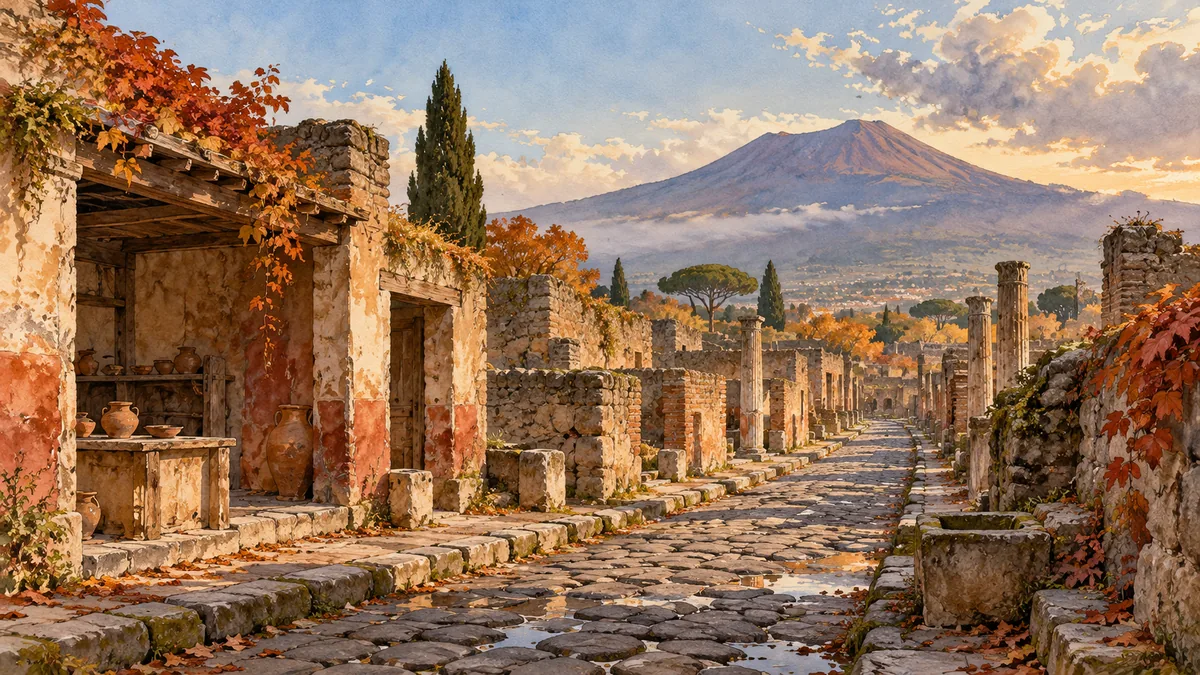
There is something special about Pompeii in November. The light grows softer, Mount Vesuvius stands out against the clear sky on sunny mornings, and the ancient streets invite you to wander without the rush of summer. Between colonnades and gardens, the quieter atmosphere makes it easier to imagine the city as it was: busy with people, shops, baths and everyday life nearly two thousand years ago.
November can be a wonderful time to explore the Pompeii Archaeological Park at a more relaxed pace. It does, however, call for a little planning. Daylight hours are shorter, the weather may change quickly, and some houses have varying opening times. This guide brings together practical advice, suggestions for sunny and rainy days, expected crowds and ideas for combining Pompeii with Herculaneum, Mount Vesuvius, Naples, Paestum and the Royal Palace of Caserta.
Want to bring the ancient city to life? Take a look at our Pompeii guided tours. Walking through the Forum and the old streets with an expert guide reveals the stories behind the stones, buildings and everyday objects.
Why visit Pompeii in November?
In summer, the stones absorb the heat and the sun accompanies almost every step. November feels different. Mornings can be beautifully bright, long shadows trace the outlines of columns, and cooler temperatures often make it easier to explore the extensive site on foot. This is an excellent season for noticing details you might otherwise pass by: an inscription on a wall, the rainwater basin in an atrium, or a mosaic that hints at the taste and ambitions of its owner.
Of course, quieter does not mean empty. Weekends, public holidays and free-admission days may still attract large numbers of visitors. Ordinary weekdays, especially later in the month, are generally more peaceful. Our advice is to arrive in the morning, make the most of the daylight and leave some flexibility in your plans.
Pompeii opening hours in November 2026
From 15 October to 15 March, Pompeii follows its winter timetable: open from 9:00 am to 5:00 pm, with last admission at 3:30 pm. Remember that 3:30 pm is the latest time to enter, not an ideal time to begin a full visit. Pompeii is enormous. Allow at least three or four hours, and preferably most of the day if you want to explore beyond the main monuments.
- Pompeii Archaeological Park: 9:00 am–5:00 pm; last admission 3:30 pm.
- Herculaneum Archaeological Park: 8:30 am–5:00 pm; last admission 3:30 pm.
- Mount Vesuvius, Great Cone: the usual November visiting window is approximately 9:00 am–3:00 pm, subject to weather and trail restrictions.
- National Archaeological Museum of Naples (MANN): usually 9:00 am–7:30 pm; closed on Tuesdays, except for special openings.
Individual houses and buildings within Pompeii may have shorter or changing opening times. Some rooms can close for conservation, staffing or restoration work. Check which areas are accessible on the day of your visit, and do not build your entire itinerary around a single house.
November weather: what to wear and what to pack
Imagine arriving at Porta Marina with a little sunshine on your face, then being caught by a shower an hour later. This is entirely possible in November. Layers are the best approach: a comfortable base layer, a jumper or fleece and a waterproof, wind-resistant jacket. A light scarf can be helpful when the breeze picks up.
Good shoes matter more than almost anything else. Choose comfortable, closed footwear with non-slip soles. Roman roads are spectacular, but their ancient paving stones, steps and uneven surfaces can become slippery when wet. Bring a compact umbrella or rain jacket, a bottle of water, a small snack if needed and a portable phone charger. Travel light: the Archaeological Park restricts the size of bags allowed inside.
Families with children will enjoy the day more with short breaks and a realistic route. If you have limited mobility, accessible itineraries are available, although the archaeological nature of the site means not every building can be reached in the same way.
What to see in Pompeii on a sunny November day
If the sky is clear, let the shape of the city guide your walk. The Forum is a natural starting point. Here you can picture the public life of Roman Pompeii, surrounded by temples, civic buildings and open squares. From there, follow the streets towards shops, public spaces and private homes.
When open, the House of the Faun, the House of the Vettii and the city's frescoed houses offer a glimpse into the lives of Pompeii's wealthier residents. Their decorations still convey the colours, fashions and ambitions of another age. For the city's shared spaces, seek out the Large Theatre, the Amphitheatre and the Large Palaestra, which tell the story of entertainment, public life and community.
If time and access conditions allow, make the extra walk to the Villa of the Mysteries. Its extraordinary wall paintings are among the most evocative surviving works of Roman art. Opening arrangements can change, so check the day's accessible buildings before setting off.
A guided tour of Pompeii can help you connect these places into one story. Knowing what an ancient building was used for is interesting; understanding the people who lived there is what makes the visit unforgettable.
What if it rains? Discovering a different Pompeii
Rain does not automatically mean you must cancel your visit, but it calls for sensible decisions. Light rain, when conditions are safe, can lend the streets and courtyards a surprisingly atmospheric quality. Opt for a shorter route near your chosen entrance and visit only those indoor spaces that are officially open and accessible. Do not assume every house can be used as shelter: access to individual buildings may be restricted or temporarily closed.
In heavy rain, strong winds or when the Park announces safety restrictions, consider reducing your visit or moving part of the day indoors. The National Archaeological Museum of Naples is the natural continuation of a trip to Pompeii: original frescoes, mosaics, sculptures and everyday objects from the Vesuvian cities help you understand the places where they were found. It is a rewarding alternative when daylight is limited, too.
Discover Pompeii before you arrive: audio guides and the official guidebook
Here is one small suggestion that can transform your experience: start getting to know Pompeii before you set foot inside the ancient city. On Pompeionline you can explore Listen to Pompeii, our collection of audio guides. Listen at your hotel, on the train or the evening before your visit. Recognising a street, house or historical character once you reach the ruins is a real pleasure.
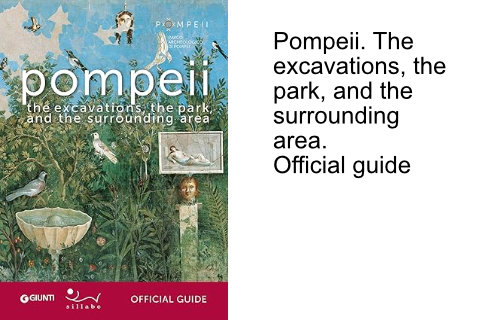
If you enjoy preparing with a book, you may also like the official guide to the Archaeological Park of Pompeii. Our page introduces the publication and provides information about obtaining it. It makes an excellent companion for planning your route and revisiting what you have seen afterwards.
And after your guided visit? Mobile internet coverage is generally available in the Pompeii area, although the strength and reliability of the signal can vary. You can continue reading Pompeionline on your phone to learn more about the houses and monuments you have just explored. Please respect the Archaeological Park's rules on audio-guide equipment while inside: the safest approach is to enjoy our audio content before entering or after leaving, and use our written pages for further reading during the visit.
Getting to Pompeii and moving around the ruins
From Naples, many visitors take the Circumvesuviana railway to Pompei Scavi – Villa dei Misteri, close to the Porta Marina entrance. Alternatively, mainline trains reach Pompei station in the modern town, from where you can continue on foot or use local transport. Travelling from Sorrento? The Circumvesuviana line also provides a direct connection to the archaeological area. Always check the timetable for your actual travel date, particularly on public holidays.
If you are driving, private car parks are available near the entrances. Allow extra time for traffic and parking on busy days. Once inside, most of the visit is on foot. Pompeii covers a large area, and trying to race from one end to the other rarely makes for the best experience. Choose a few places you particularly want to see and allow time simply to wander.
How busy will Pompeii be in November?
Travellers hoping for quieter streets and fewer large groups should choose weekday mornings where possible. There are, however, dates worth keeping in mind. On 4 November 2026, Italy's National Unity and Armed Forces Day, free admission is scheduled at participating state cultural sites, including Pompeii and Herculaneum. This is a great opportunity, but it may also mean larger crowds. Saturdays and Sundays can be popular, especially when the forecast is good.
If you have a particular tour or a limited time slot in mind, book ahead and check the entry arrangements. For a guided visit, always confirm your meeting point, starting time, tour language and duration before travelling.
Herculaneum: the perfect companion to Pompeii
If Pompeii impresses with its scale, Herculaneum wins visitors over with the intimacy of its streets and the remarkable preservation of many buildings. Houses, decorations and traces of daily life often feel unusually close. On a crisp autumn day, its balconies, atria and small shops can make the ancient town seem almost familiar.
Consider a guided visit to Herculaneum, or explore the combined Pompeii and Herculaneum guided tour if you would like to compare the two Vesuvian cities with an expert. Visiting both on the same day requires an early start and careful timing, so give each site the attention it deserves.
A special November event: on 7, 14, 21 and 28 November 2026, Herculaneum is offering scheduled accompanied visits to the restoration site of the Suburban Baths. Places are limited and a separate reservation is required. It is an unusual chance to learn more about the conservation work behind one of the Roman world's best-preserved bath complexes.
Mount Vesuvius in November: let the weather decide
After walking through the cities buried by the eruption, seeing the volcano itself has an entirely different meaning. The path towards the Great Cone of Mount Vesuvius offers sweeping views across the Bay of Naples, and on clear days the landscape is particularly memorable.
November requires caution, however. Temperatures are lower at altitude, the wind can be strong and the trail may close at short notice. Wear suitable shoes, carry an extra warm layer and check the weather and access conditions before setting out. For transfers, see the transport options from Herculaneum to Vesuvius, checking exactly what your selected ticket includes. Staying in Naples? You can also consider a Pompeii and Vesuvius day trip from Naples.
Never force a volcano excursion in poor weather. Safety and visibility matter more than sticking to a timetable. If the crater is inaccessible, Naples and its museums offer wonderful alternatives.
The MANN: where Pompeii's and Herculaneum's treasures tell the rest of the story
At the National Archaeological Museum of Naples (MANN), the story that begins among the ruins continues in front of the original objects recovered from the ancient cities. A mosaic, fresco or ordinary household object takes on new meaning when you know where it once belonged. That is why we especially recommend combining the museum with Pompeii or Herculaneum.
The MANN is also ideal for a rainy afternoon or the day after your archaeological visit. See our guided tour of the National Archaeological Museum of Naples, and check the available dates, open collections and conditions before booking.
Naples, Oplontis and Stabiae: keep exploring
If your stay is longer, Naples deserves time beyond the museum. Wander through its historic centre, discover the lively streets and churches, enjoy the local food and perhaps venture beneath the city on a Naples Underground tour.
Closer to Pompeii, the Villa of Poppaea at Oplontis and the Roman villas of Stabiae complete the picture of life around Vesuvius. They are rewarding destinations for anyone who loves Roman wall paintings and would like to explore beyond the best-known sites. Check opening times and transport connections before adding them to your plans.
Paestum: when your trip deserves another day
South of Salerno, Paestum offers a spectacular change of scenery. After the houses and streets of Pompeii, its great Greek temples rise dramatically from the landscape. On a clear November day, the autumn light on their columns can be extraordinary. If the weather turns, the archaeological museum is well worth visiting.
Paestum is not a stop to squeeze hurriedly into a full day at Pompeii: treat it as a separate day trip or another stage of your journey through Campania. You can explore Paestum guided tours with admission included when planning your visit.
The Royal Palace of Caserta: another remarkable day in Campania
If you have more time, the Royal Palace of Caserta adds a very different chapter to your holiday, taking you from the world of ancient Rome to the grandeur of the eighteenth century. The Royal Apartments deserve a leisurely visit, while the gardens change colour in November and may be affected by weather and seasonal access arrangements.
For travellers who would like to organise a guided visit, see our partner Tiqets: Royal Palace of Caserta entry ticket and guided tour. Check which November dates are available, what is included and the cancellation or rescheduling rules shown for your booking.
Tickets, cancellations and reservations: what to check before booking
The experiences linked from Pompeionline are not all the same. Some include entry only; others add a live guide, transport or several destinations. Many tickets offer a cancellation option, sometimes free of charge up to a specified deadline, but not every ticket is refundable. Read the conditions of the individual offer before paying: duration, meeting point, language, included services and refund policies can vary.
This is especially worth checking in November, when a change in the weather may affect your plans. Choosing a ticket with the right conditions can be just as important as choosing the right itinerary.
Three easy ways to plan your November visit
Only have half a day?
Arrive early, focus on the Forum and a few houses that are open, and consider a guided tour of Pompeii to give the experience context. Afterwards, spend some time in modern Pompeii or continue towards Naples.
Have a full day?
Spend the morning and part of the afternoon in the archaeological park. On a clear day, make time for the Villa of the Mysteries and the main public buildings. If the weather changes, shorten your walk and choose a museum or another indoor stop. Remember how early the light fades.
Have two or three days?
Build a short journey into the Vesuvian world: Pompeii on day one, Herculaneum on day two, then Mount Vesuvius if the conditions allow. Add the MANN to see the original finds, or devote another day to Paestum or the Royal Palace of Caserta according to your interests.
November: the perfect time to listen to Pompeii's stories
Pompeii is more than a place to photograph. It is a city to read slowly, street by street. In November, as the sunlight falls across the colonnades and your footsteps echo on the ancient paving, it becomes a little easier to imagine the voices, habits and daily routines of the people who lived here. Start with our Pompeii audio guides, choose a guided visit and let the streets tell you the rest.
November 2026 visitor guide. Opening hours, access to individual buildings, events, transport and booking terms may change. Always check the latest arrangements before travelling.