


Pompeii official guide
Pompeii News and Updates
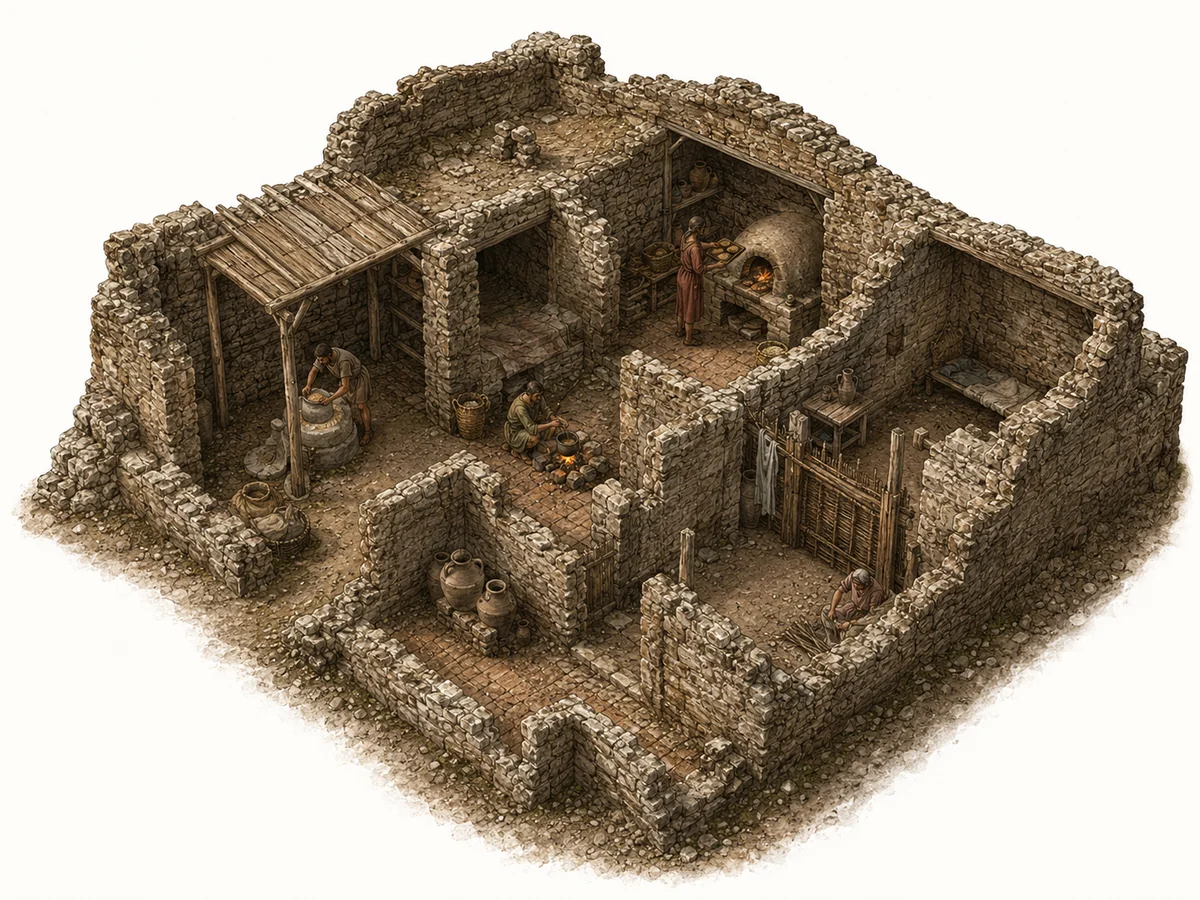
Pompeii’s history did not end completely with the eruption of Mount Vesuvius in AD 79. New archaeological investigations in the Insula Meridionalis, the large district occupying the southern edge of the ancient city, are revealing traces of human activity that continued for many centuries after the catastrophe.
Hearths, a bread oven, a grain mill, wooden structures and pottery provide evidence for the reuse of some areas between the 3rd and mid-5th centuries AD. Even more surprisingly, finds dating to the 15th and 16th centuries suggest that people were still frequenting parts of Pompeii during the Renaissance, long before the Bourbon excavations began in 1748.
- Details
- Written by: Pompei Online
-
Also available:

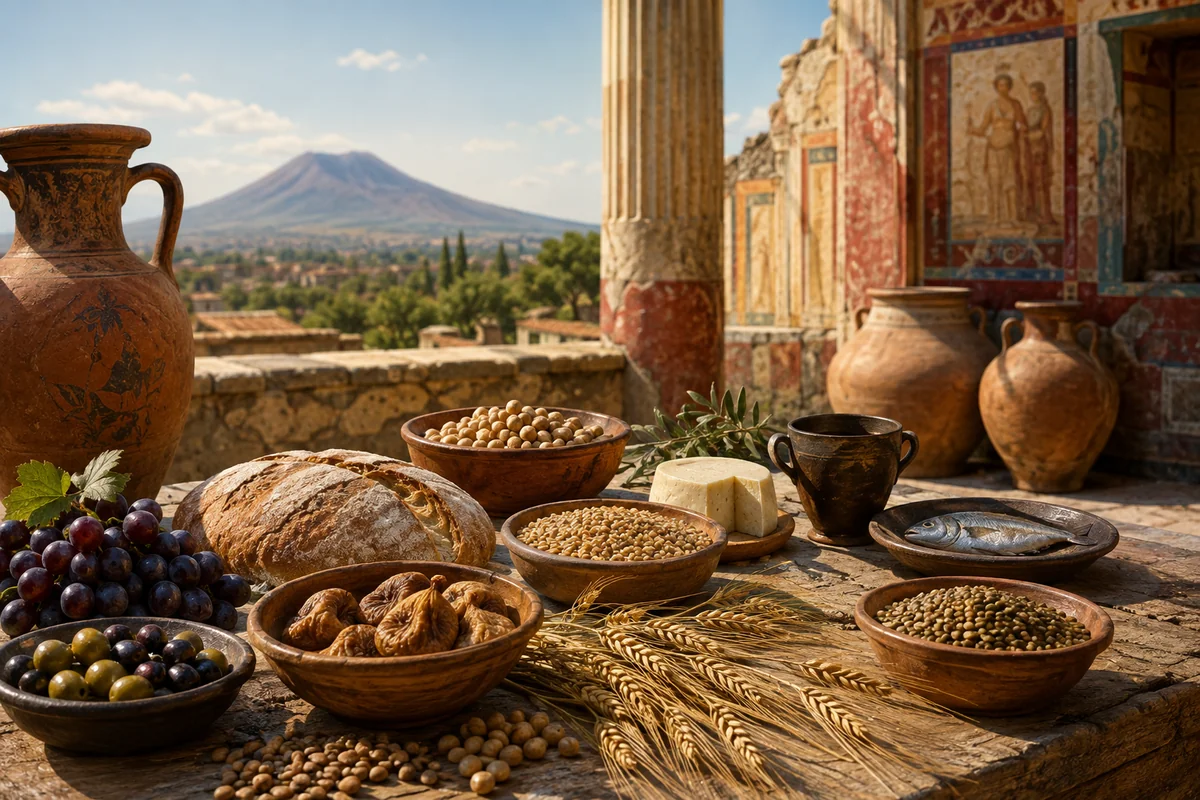
Bread, cereals, legumes and products from the land were probably at the heart of the daily diet of the people of Oplontis who died during the eruption of Mount Vesuvius in AD 79. This is revealed by a new bioarchaeological study of human remains found in the so-called Villa B, in modern-day Torre Annunziata, just a few kilometres from ancient Pompeii.
The research offers a particularly fascinating glimpse into everyday life in the Vesuvian area. Almost two thousand years after the eruption, the analysis of human bones makes it possible to reconstruct not only how some of the victims died, but also the foods that formed part of their diet.
- Details
- Written by: Pompei Online
-
Also available:
From 28 August to 10 October 2026, the “Serate della Grande Pompei” (Evenings of Greater Pompeii) return, with special night-time visits to the archaeological sites of Pompeii, Oplontis, Boscoreale and Stabiae.
Every Friday and Saturday, visitors will be able to explore sites managed by the Archaeological Park of Pompeii in the evening, from 7:30 pm to 11:30 pm, with last admission at 10:30 pm. It is an opportunity to experience the archaeological heritage in a very different atmosphere from a normal daytime visit.
- Details
- Written by: Pompei Online
-
Also available:
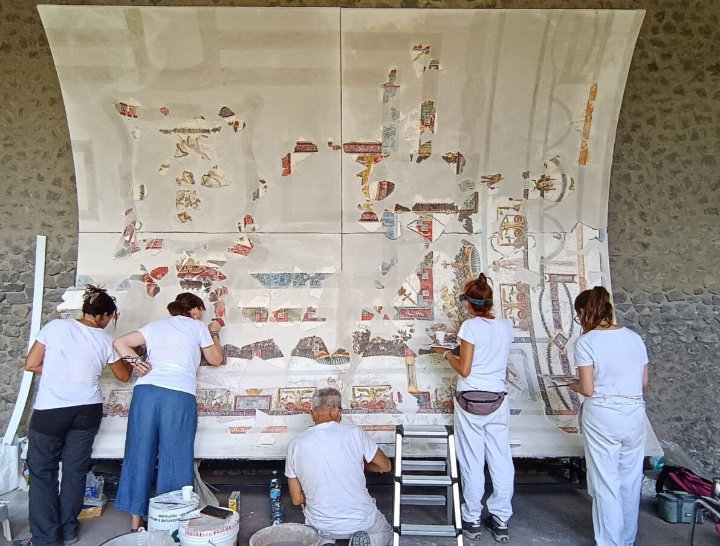
An ancient decorated ceiling, which collapsed during the eruption of Mount Vesuvius and was found in hundreds of fragments, is gradually revealing its extraordinary beauty once again. The Archaeological Park of Pompeii has presented the restoration of the vaulted ceiling from a banqueting room in the so-called House with a Bakery in Regio IX, one of the buildings involved in the most recent excavation campaigns.
- Details
- Written by: Tiberio Gracco
-
Also available:
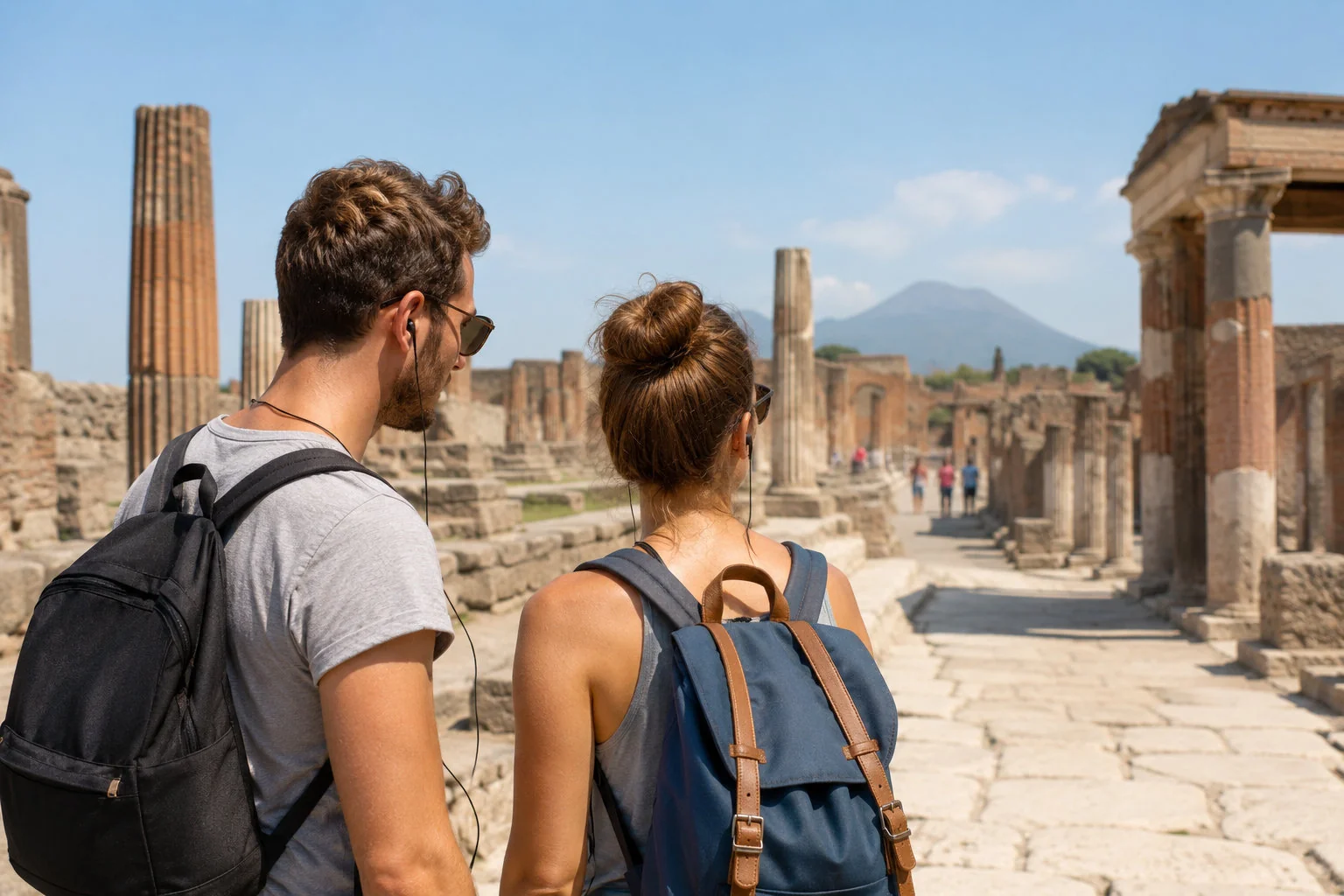
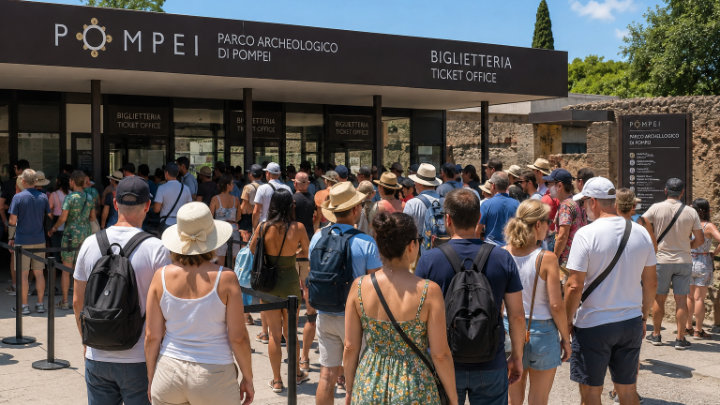
Planning a visit to the Archaeological Park of Pompeii is an unforgettable experience. However, it is not always easy to know exactly what time you will arrive. Traffic, train delays, or changes to your travel plans can make it difficult to stick to a fixed schedule.
For this reason, a new ticket is now available that gives you much greater flexibility. Unlike most Pompeii tickets, this one does not require you to book a specific entry time slot. You can enjoy your visit without worrying about arriving at a pre-booked time.
- Details
- Written by: Pompei Online
-
Also available:
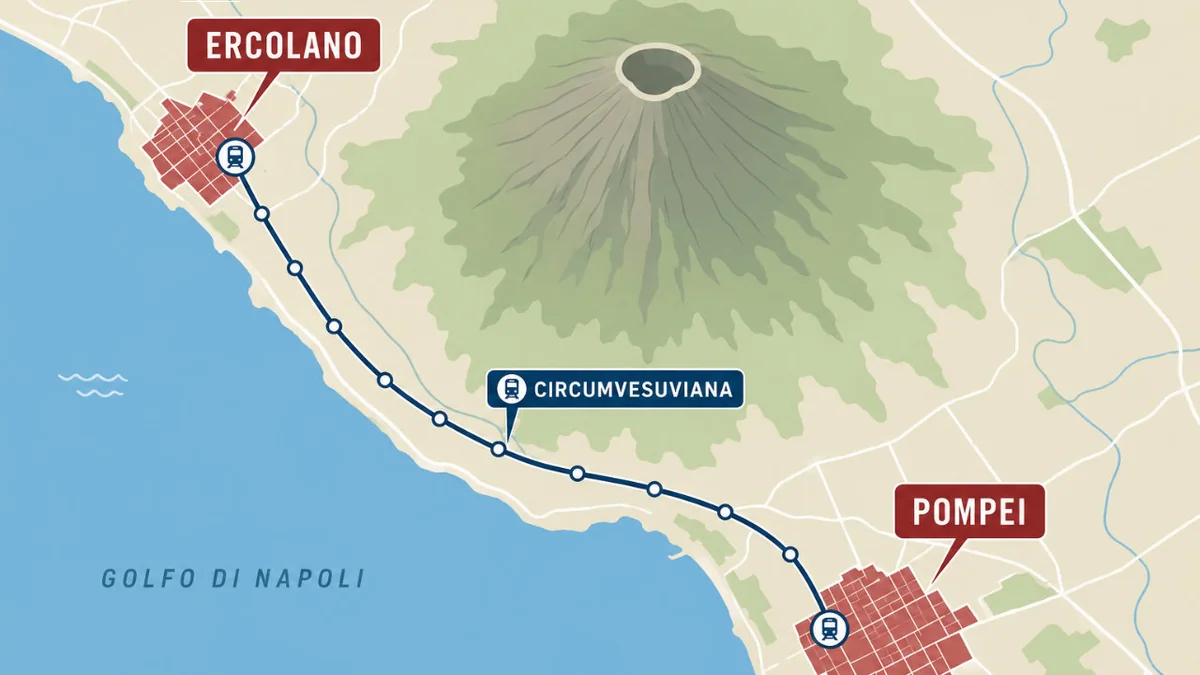
Visiting the ruins of Pompeii and Herculaneum on the same day is one of the most fascinating and highly requested experiences for travelers exploring the Campania region. Both ancient cities were frozen in time by the tragic eruption of Mount Vesuvius in 79 AD, yet they offer two completely different glimpses into Roman life. Pompeii amazes visitors with its monumental scale, while Herculaneum charms with the extraordinary preservation of its upper floors and organic materials.
However, planning this double itinerary entirely on your own can quickly turn into a logistical headache. Juggling train schedules, waiting in long ticket lines under the sun, and managing your time efficiently can be a real challenge.
Here is the definitive guide by Pompeionline to organizing your perfect, stress-free day.
- Details
- Written by: Pompei Online
-
Also available:
- Details
- Written by: Pompei Online
-
Also available:
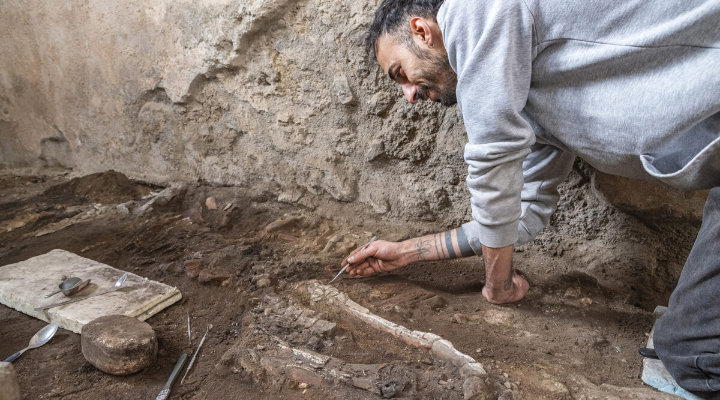
Pompeii never ceases to amaze, and sometimes the most moving discoveries come from simple "cleaning" operations in already known areas. This is exactly what happened recently in the Insula of the Chaste Lovers, where new excavations brought to light a story of death and a tender bond between humans and animals, buried for nearly two thousand years in a corner of an ancient bakery.
- Details
- Written by: Pompei Online
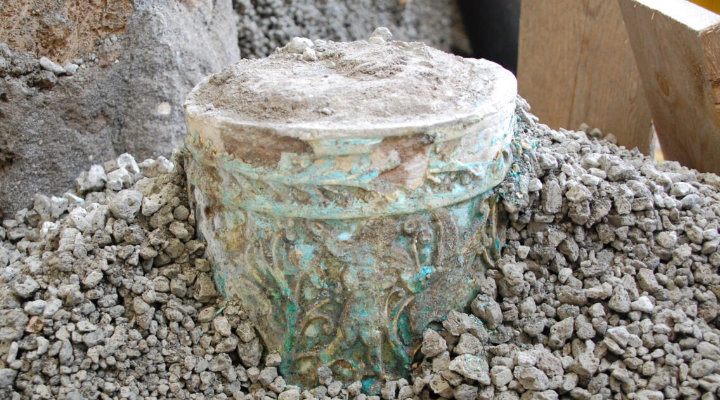
During recent stabilization and conservation work at the famed Thermopolium in Regio V, an intriguing detail came to light: at the center of the service kitchen stood a refined glass-paste situla made in Alexandria, Egypt, decorated with hunting scenes in a Nilotic style. An object usually found in Vesuvian contexts as a high-status garden or reception ornament was, in this case, repurposed as a practical kitchen container. Ongoing analyses may even reveal traces of its original contents.
- Details
- Written by: Pompei Online
-
Also available:
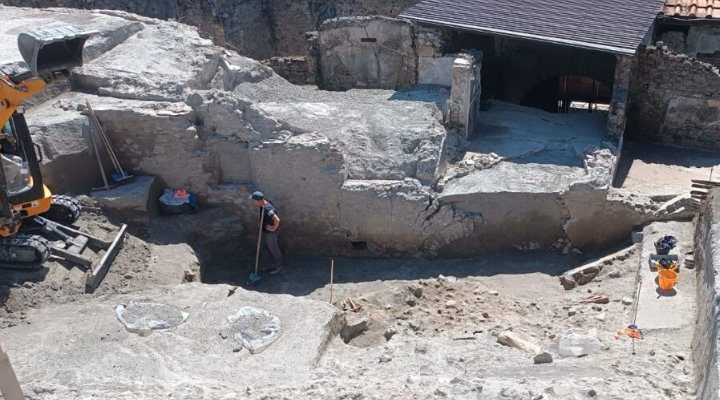
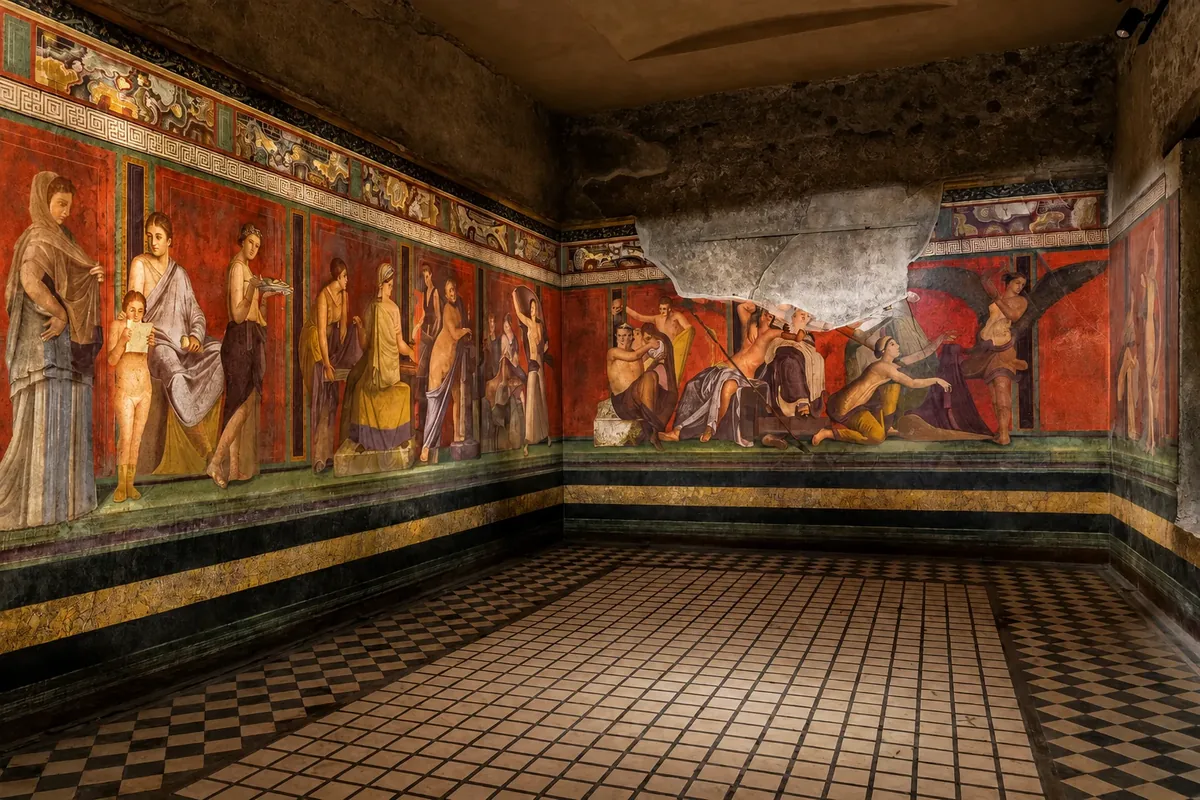
The Villa of the Mysteries, one of the most iconic Roman residences outside Pompeii and world-famous for its extraordinary Second Style Dionysian fresco cycle, continues to reveal secrets that deepen our understanding not only of ancient art, but also of daily life and social dynamics nearly two thousand years ago.
- Details
- Written by: Pompei Online
-
Also available:
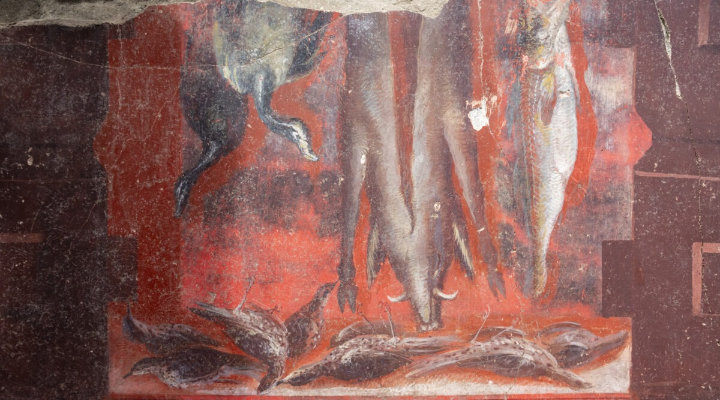
How did the inhabitants of ancient Pompeii truly nourish themselves? Which animals were raised, what grains were cultivated, and what marine resources were exploited? These questions are addressed in a new scientific study recently published in the journal Scientific Reports, the result of a collaboration between several Italian and international research institutions.
- Details
- Written by: Pompei Online
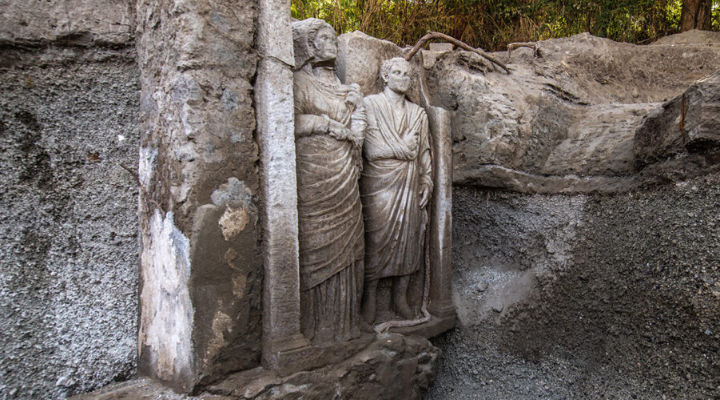
Recent excavations in the Porta Sarno funerary area of Pompeii have led to the extraordinary discovery of a monumental tomb adorned with a life-size relief depicting a married couple. This exceptional find, a result of the "Investigating the Archaeology of Death in Pompeii Research Project," sheds new light on the funerary practices, religious beliefs, and social structure of the ancient Vesuvian city.
- Details
- Written by: Comunicato stampa
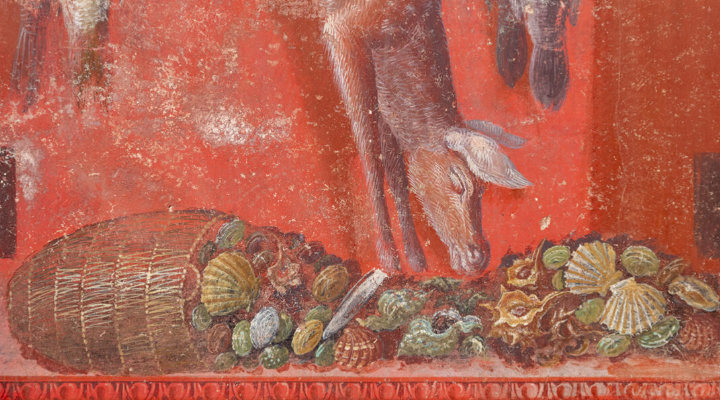
More than 100 years after the discovery of the Villa of the Mysteries, a major new fresco sheds light on the mysteries of Dionysus in the classical world. In a large banquet hall excavated in recent weeks in the central area of Pompeii, in insula 10 of Regio IX, an almost life-size frieze, or “megalography” (from the Greek for “large painting”-a cycle of large-figure paintings), has emerged, circling around three sides of the room; the fourth was open to the garden.
- Details
- Written by: Comunicato stampa