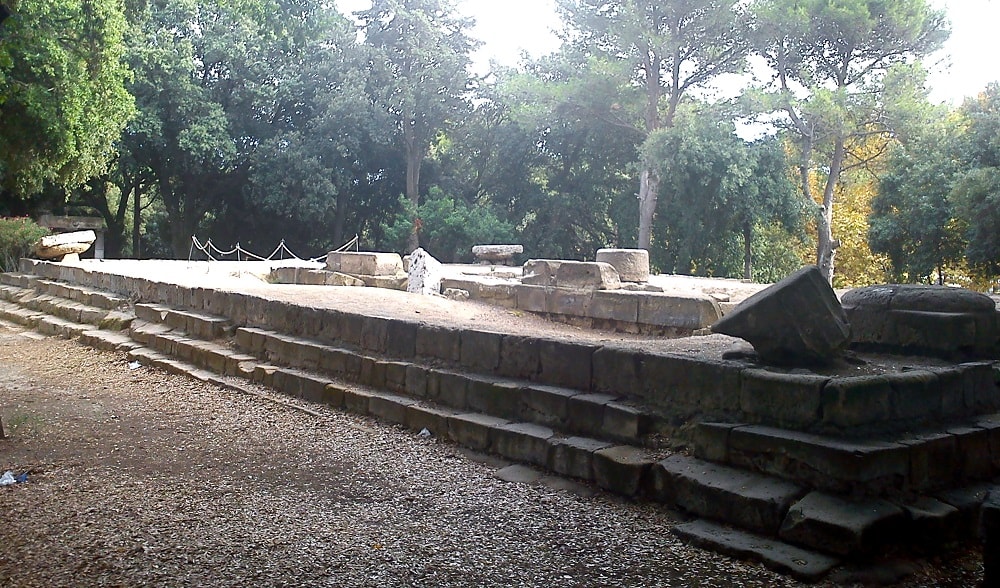
The Triangular Forum is one of Pompeii’s most evocative and ancient public spaces. It occupies a high ridge of volcanic rock in Regio VIII, overlooking the Sarno valley and, in antiquity, offering views across the plain towards the sea.
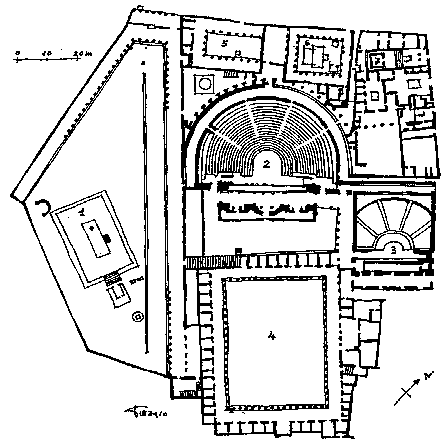
Its modern name derives from the distinctive triangular shape of the square, determined by the natural topography and the course of the ancient city walls.
The importance of the site, however, extends far beyond its shape. At the centre of the Triangular Forum stood one of Pompeii’s earliest sanctuaries, the so-called Doric Temple, probably dedicated to Athena and Heracles and dating in its earliest phases to the sixth century BC.
The area therefore offers insight into the city’s earliest history, many centuries before the Roman Pompeii buried by the eruption of AD 79.
A commanding position over the Sarno valley
The Triangular Forum occupies one of the highest points in the southern part of Pompeii.
When the sanctuary was founded, the site commanded the valley and mouth of the River Sarno, an area of fundamental importance to the ancient city’s communications, trade and economy.
From the terrace, the view extended across the plain towards the sea.
This panoramic position probably contributed to the sacred character of the area and made the sanctuary visible from a considerable distance.
Modern buildings and changes to the landscape have profoundly altered this outlook, but the close relationship between the Triangular Forum and its surroundings remains fundamental to understanding the site’s origins.
The earliest sanctuary
Religious activity in the area dates back to at least the sixth century BC.
At that time, Pompeii formed part of a cultural environment in which Italic peoples, Greeks and Etruscans exerted a profound influence on one another.
The sanctuary of the Triangular Forum provides exceptional evidence for this archaic phase of the city.
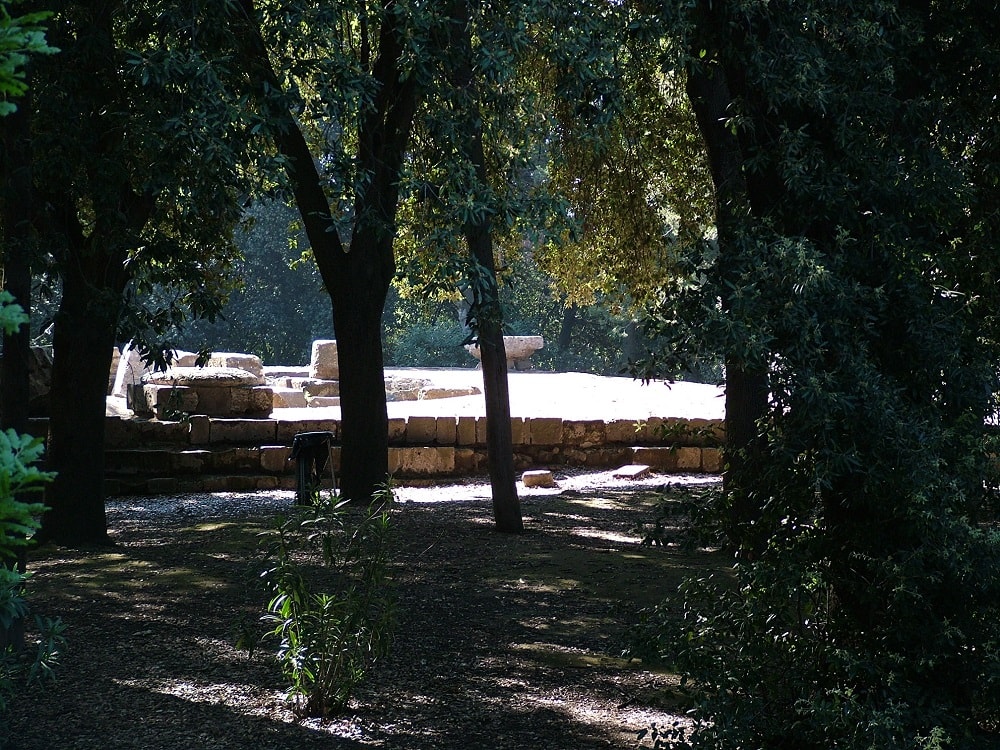
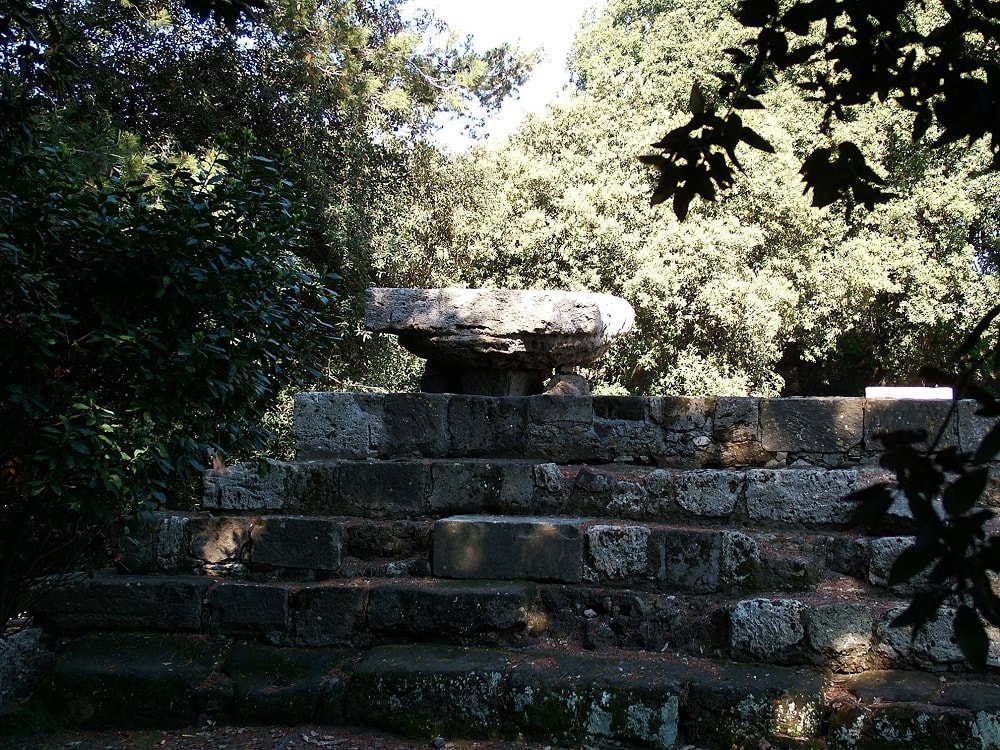
The large sacred building that stood in the southern part of the square is now known as the Doric Temple, after the form of its columns and capitals.
The cult is generally associated with Athena, probably together with Heracles, a hero of particular importance in traditions concerning the city’s origins.
The Doric Temple
The Doric Temple occupied a commanding position within the sacred area.
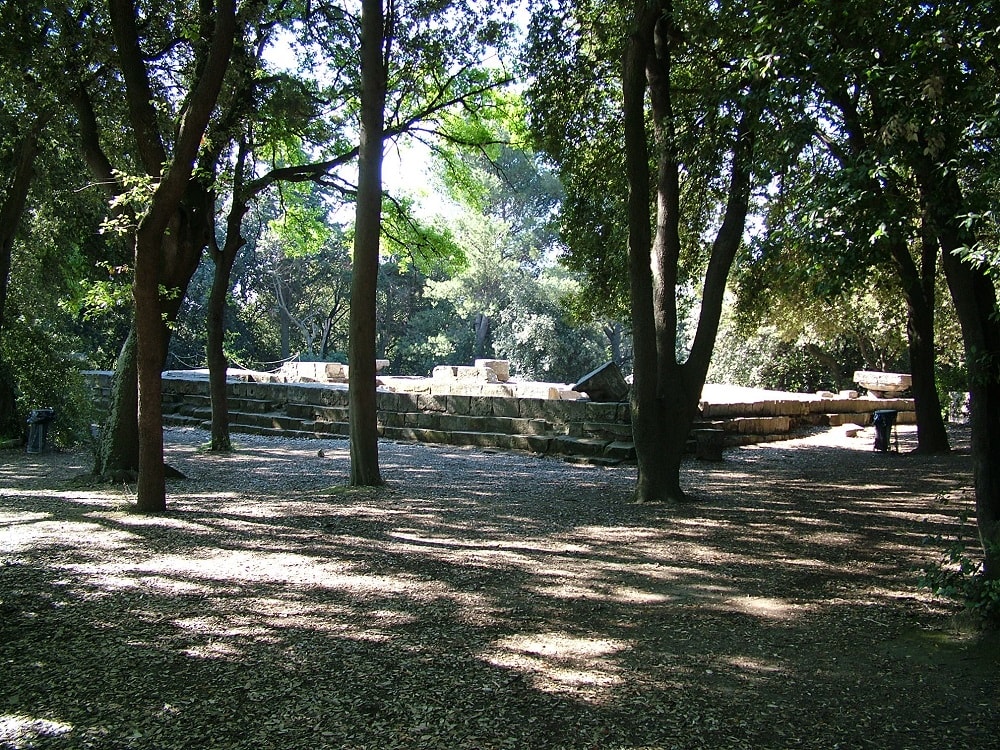
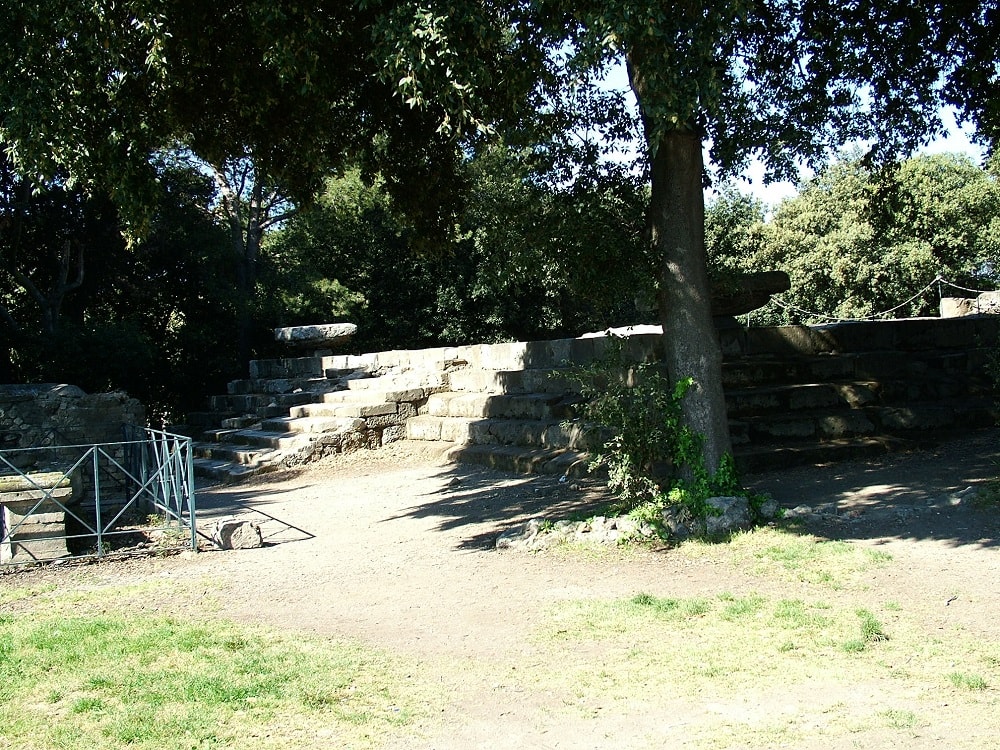
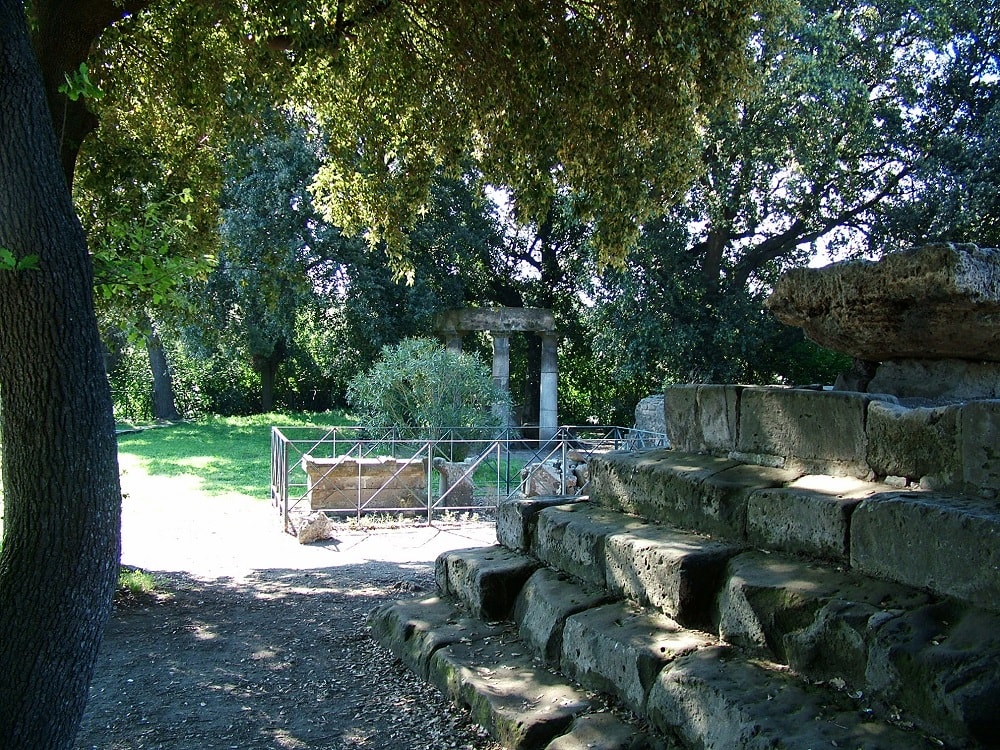
Only parts of its foundations, several steps and fragments of columns survive today, but archaeologists have been able to reconstruct at least some aspects of its original appearance.
The sanctuary displays strong connections with the Greek architectural tradition of southern Italy.
The surviving decoration and capitals have parallels among the great temples of Magna Graecia dating from the late sixth century BC.
The building was subsequently restored and altered, particularly during the Hellenistic period, when parts of it were rebuilt in the distinctive Nocera tuff.
The sanctuary’s long history shows that the site retained particular religious importance despite the profound political and cultural changes experienced by the city.
The monumental remodelling of the second century BC
The overall appearance of the Triangular Forum changed profoundly during the second century BC.
Pompeii was then enjoying a period of considerable prosperity, and many parts of the city were given a more monumental form.
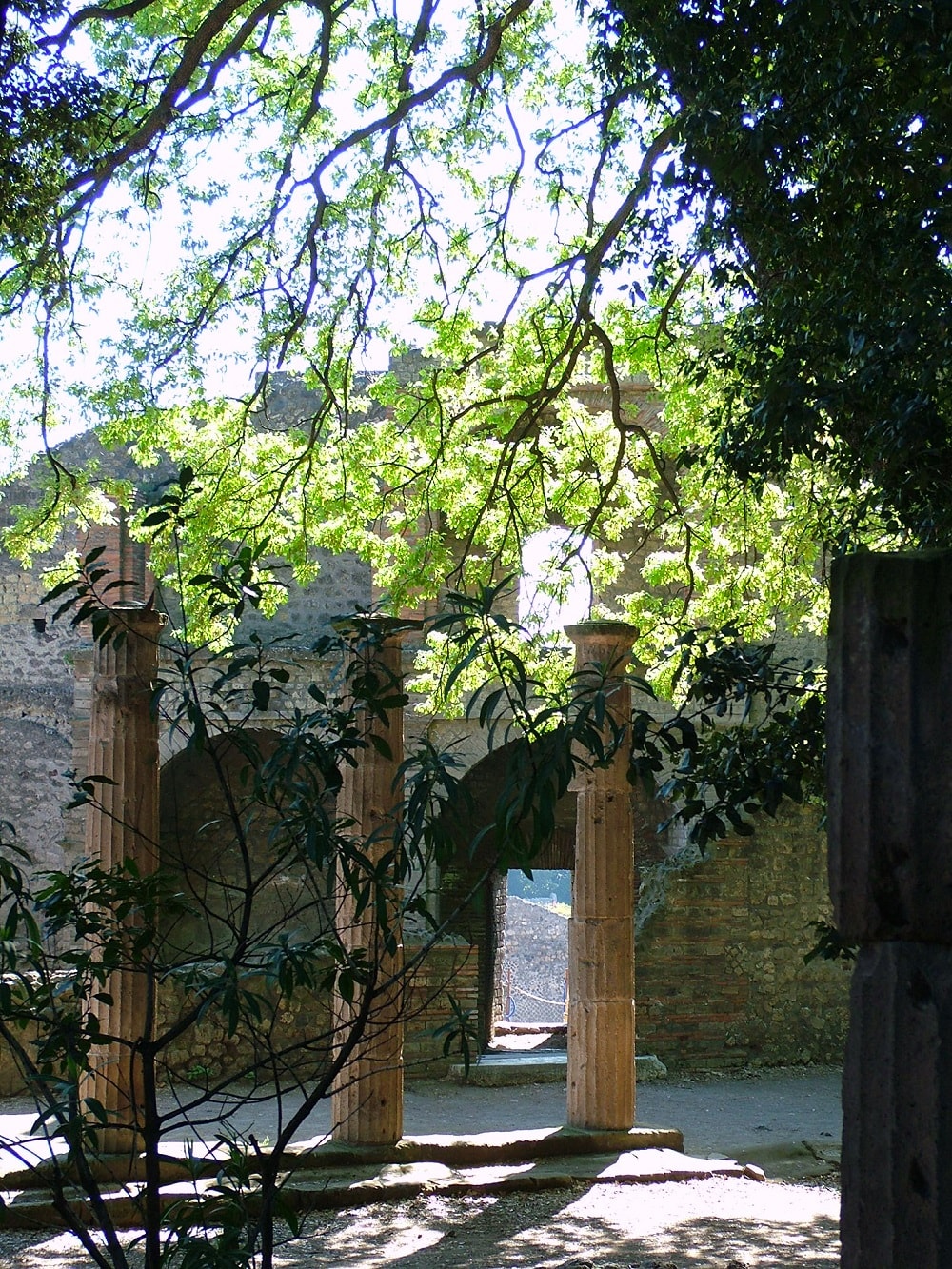
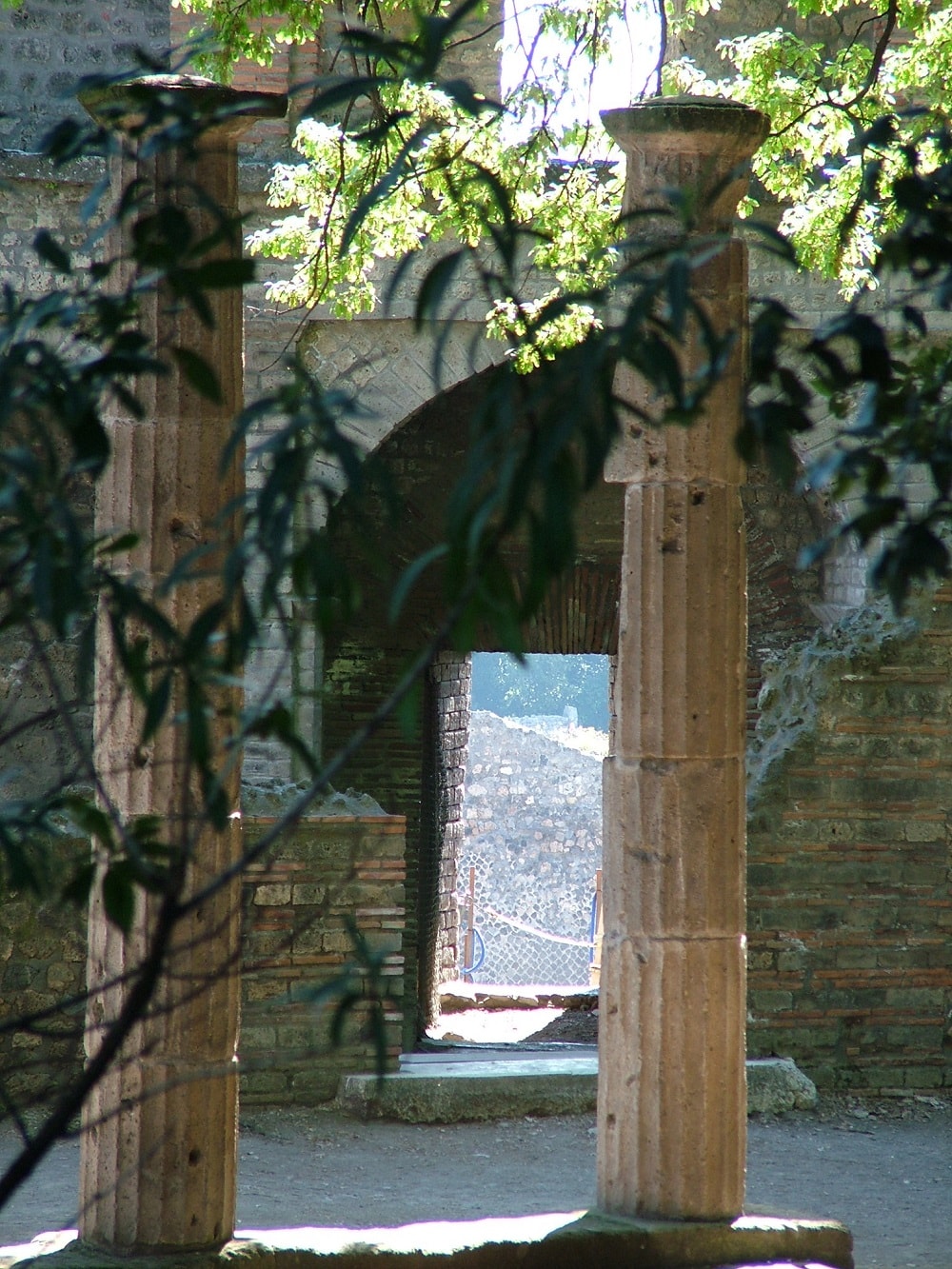
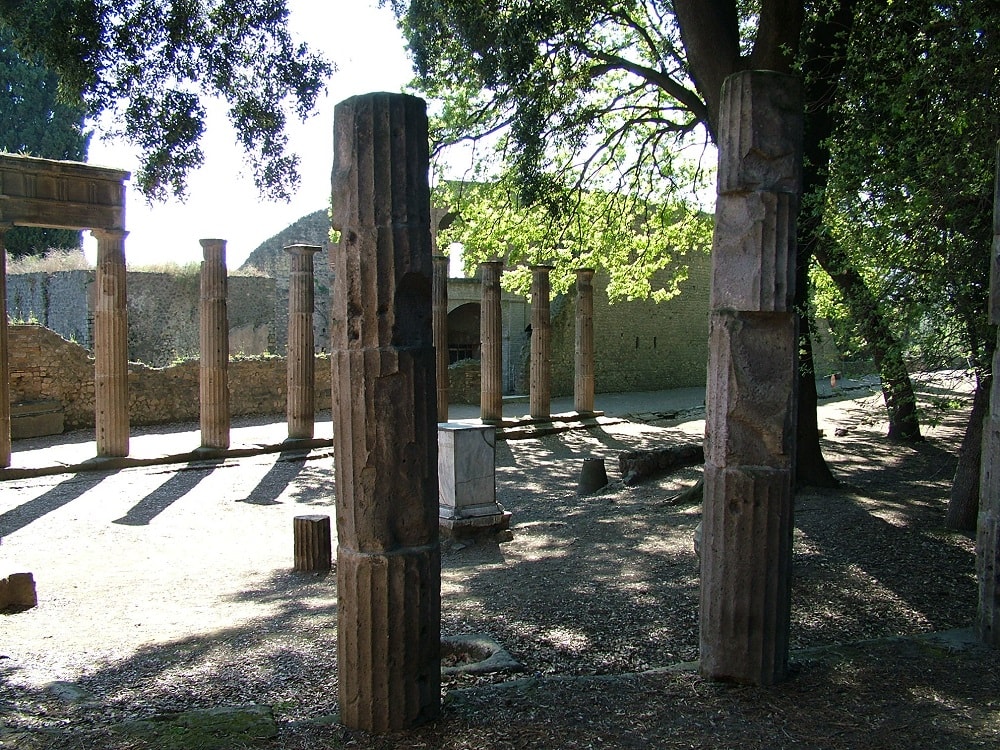
The ancient sacred area was surrounded by a large portico with tuff columns, which organised the space and created a monumental route around the sanctuary.
The colonnade followed the sides of the square, while the side facing the landscape remained more open.
This transformation did not erase the earlier place of worship, but incorporated it into a much grander form of public architecture.
The result was a complex in which religion, landscape and monumental architecture were closely integrated.
The monumental entrance
The principal entrance to the Triangular Forum was from Via dei Teatri.
Visitors passed through a monumental vestibule fronted by six columns, which formed a true entrance façade to the square.
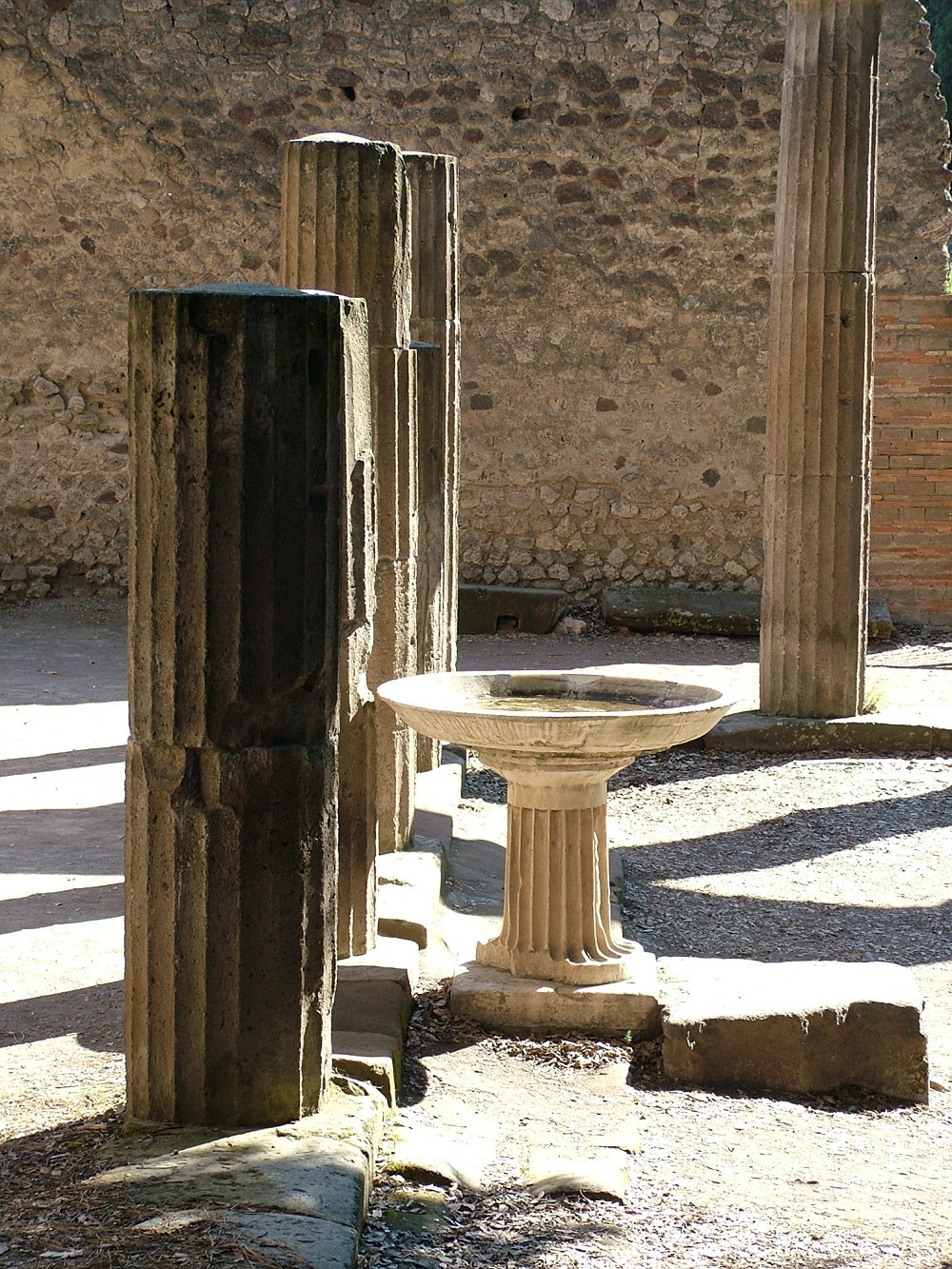
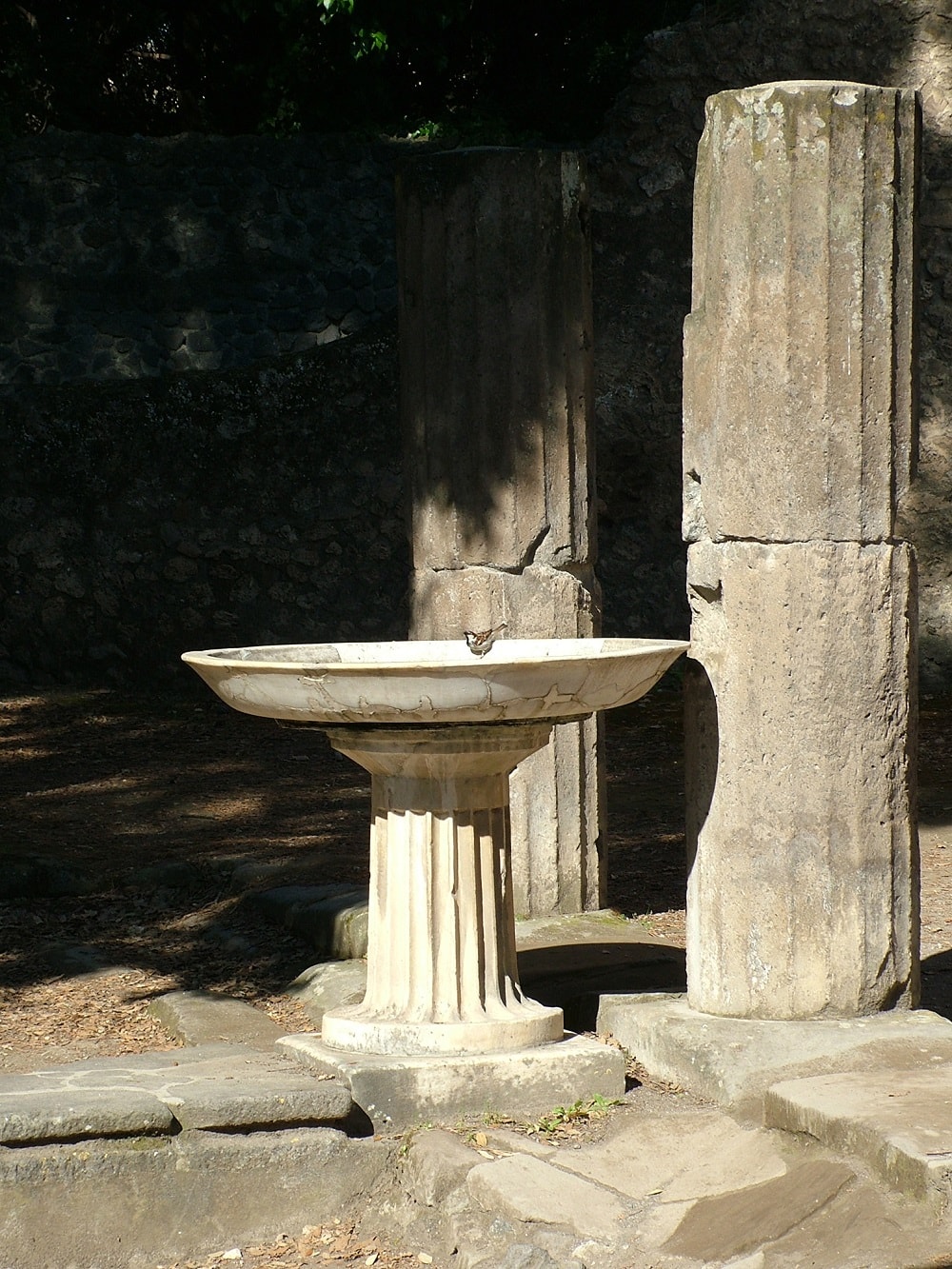
A public fountain also stood in front of the entrance.
Beyond the vestibule, visitors entered the large porticoed space, where the sanctuary gradually came into view.
The entrance was therefore designed to create a carefully arranged monumental sequence, separating the traffic of the street from the sacred space.
Heracles and the so-called Heroon
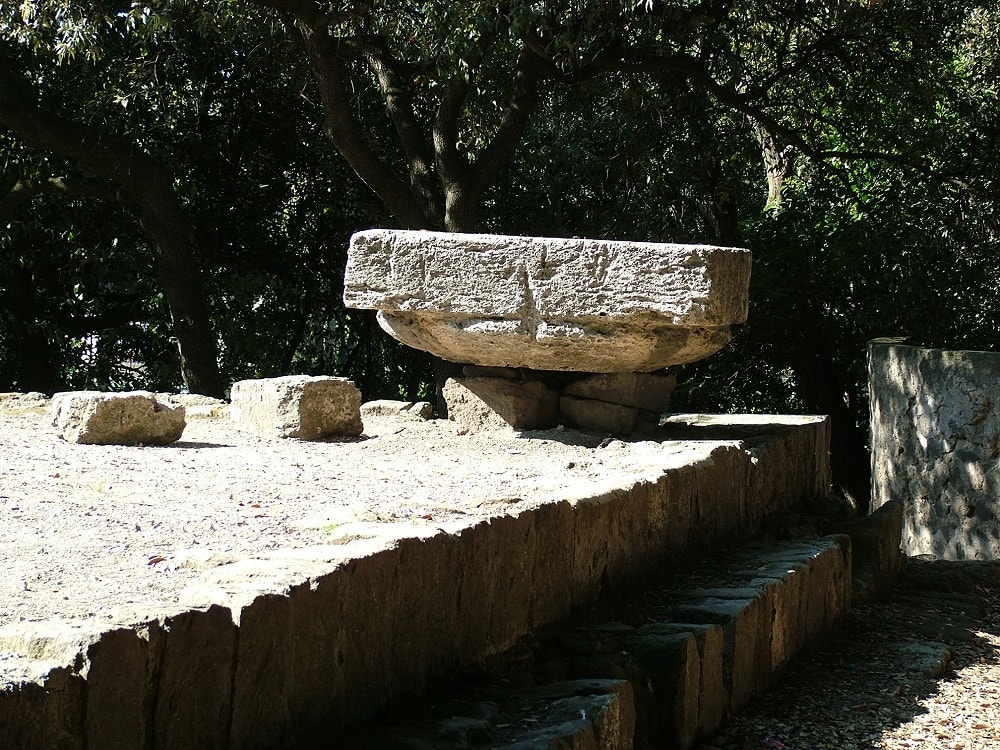
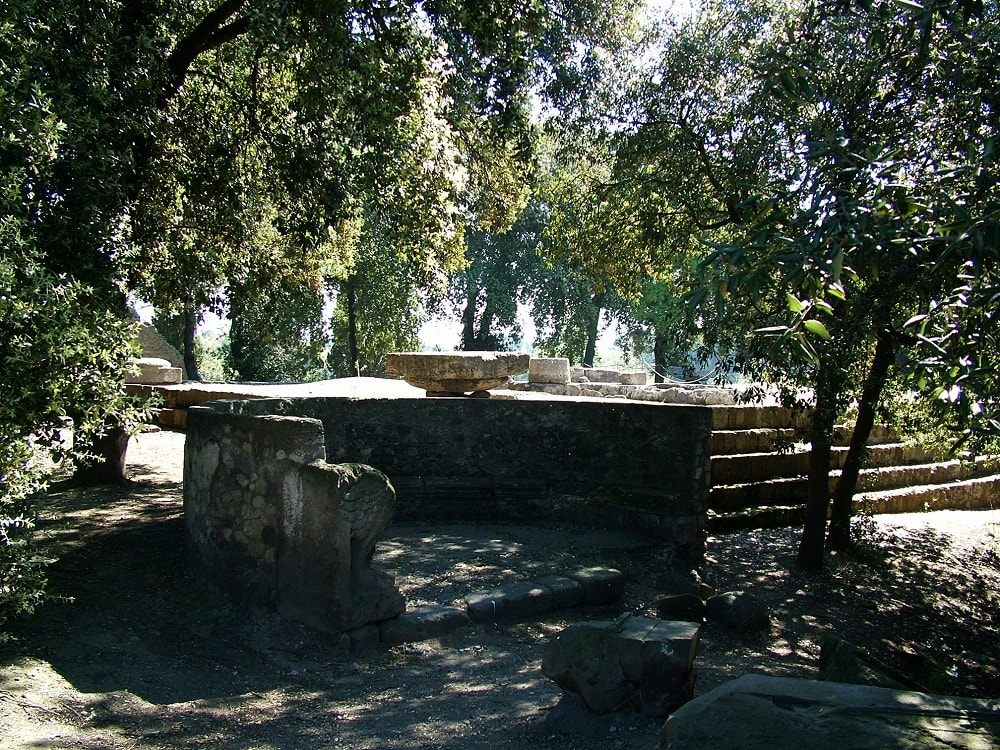
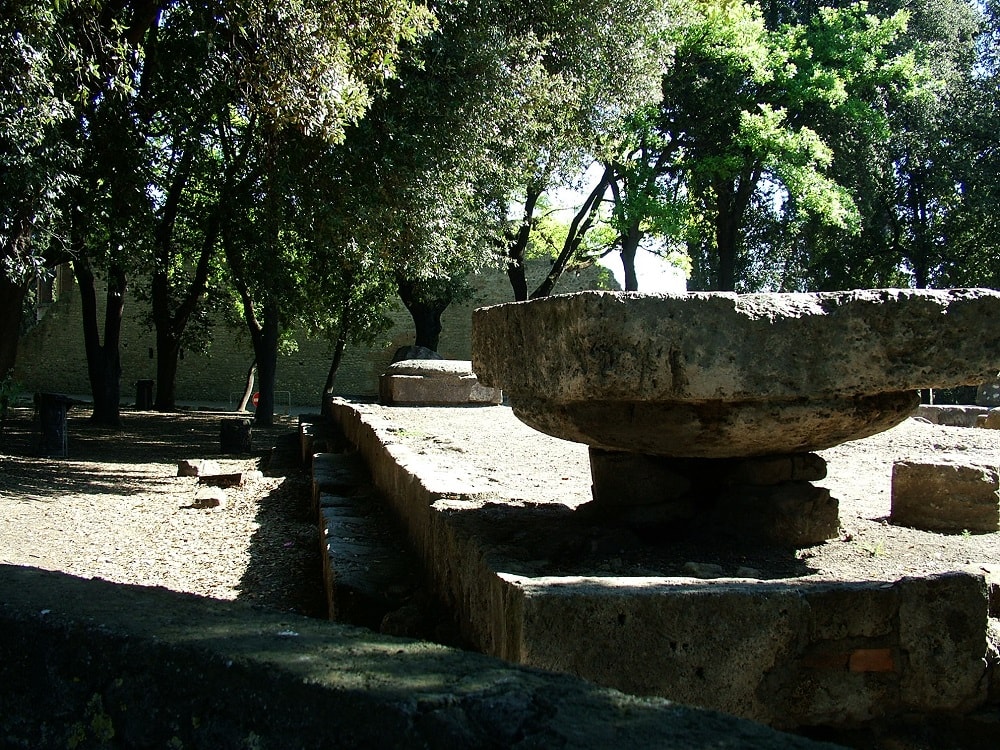
In front of the Doric Temple stands an unusual structure consisting of a double rectangular enclosure.
This monument has traditionally been interpreted as a Heroon, a place devoted to the cult of a hero.
One well-known interpretation identified it as the symbolic tomb of Heracles, regarded in some traditions as the mythical founder of Pompeii.
This identification, however, should not be considered certain.
Modern archaeological investigations are revealing a more complex history of the area than was previously assumed.
Votive pits dating to the third century BC have been identified near the so-called Heroon, nevertheless confirming the religious character of this part of the sanctuary.
The well and the tholos
Another particularly interesting structure stands behind the enclosure.
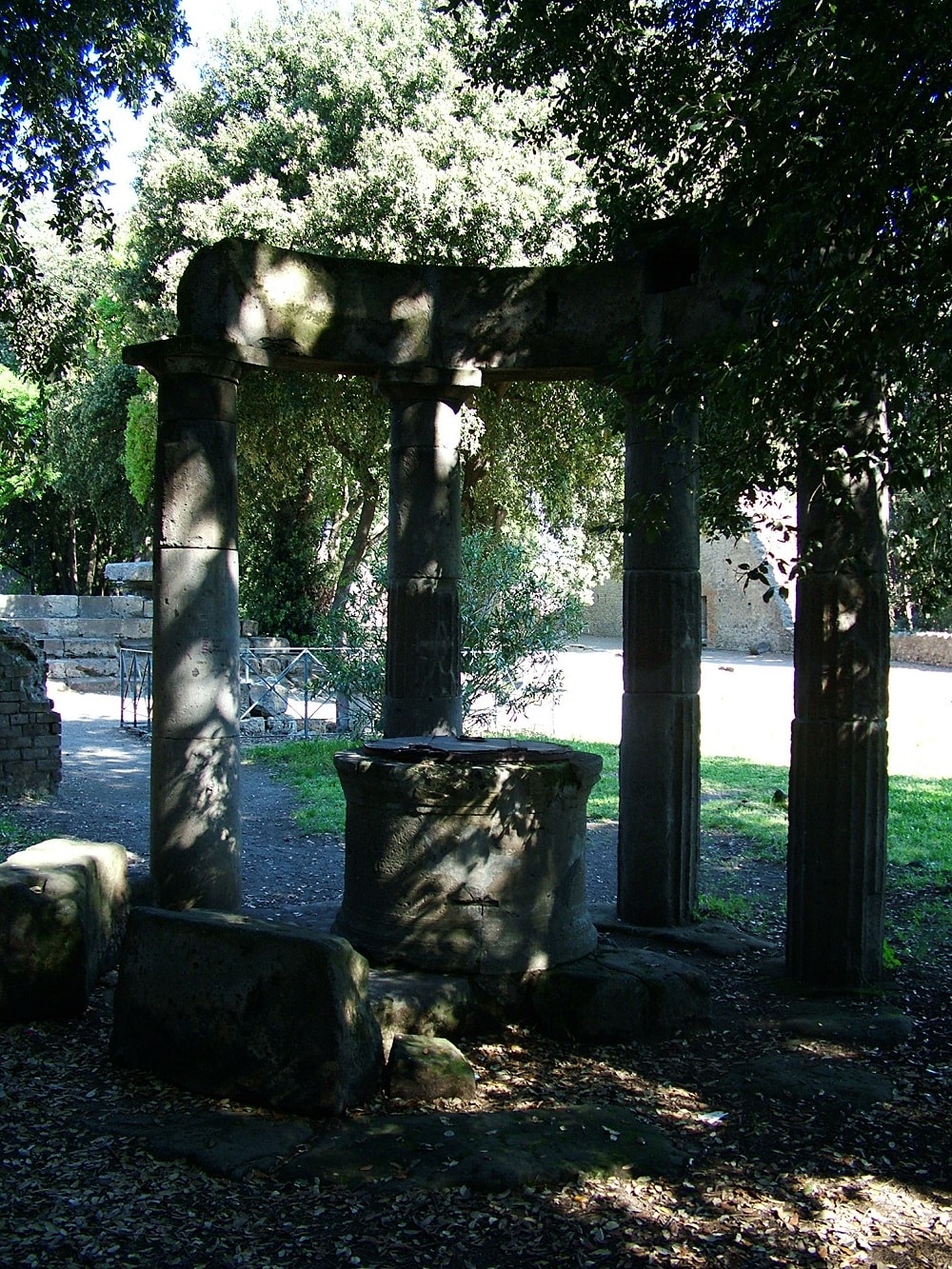
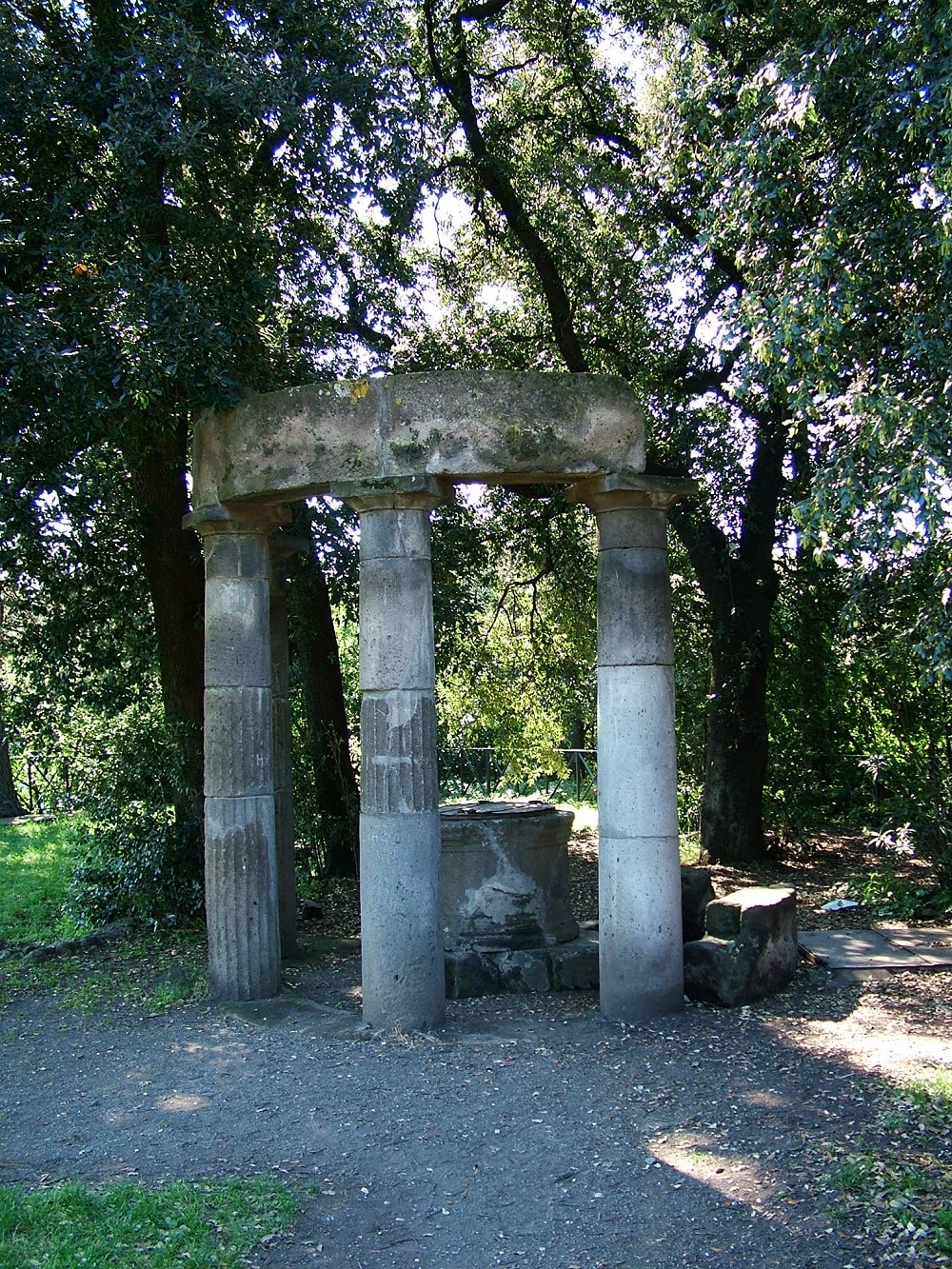
A well was surrounded by a small circular building with Doric columns, commonly described as a tholos.
An inscription associates its construction with the Samnite magistrate Numerius Trebius.
Water often played an important role in ancient sanctuaries, both for everyday needs and ritual practices.
The presence of the well within the sacred area is therefore a significant element in the organisation of the complex.
The Samnite Palaestra
The Samnite Palaestra stood on the eastern side of the Triangular Forum.
The building was intended for the physical training of young men and had an elegant portico.
The palaestra formed part of the same major programme of monumental renewal that transformed the Triangular Forum during the second century BC.
The proximity of sanctuary, palaestra and theatre reflects a cultural model strongly influenced by the Greek world, in which physical education, religion and performance could be closely interconnected.
The celebrated marble statue known as the Doryphoros also came from this area. It is a Roman copy of a Greek original attributed to Polykleitos and is now held in the National Archaeological Museum of Naples.
The relationship with the Large Theatre
The Triangular Forum is directly connected to the Large Theatre.
A side entrance provided access from the square to the upper part of the theatre.
This proximity helped create a single monumental district containing a sanctuary, palaestra and buildings devoted to performance.
The Large Theatre also made use of the same natural slope on which the southern sector of the city developed.
The area is therefore one of the places where the enduring influence of Hellenistic culture on Pompeii’s architecture and public life is most clearly visible.
A district devoted to culture and entertainment
Over the centuries, one of the city’s most important public complexes developed around the Triangular Forum.
Nearby stood:
-
the Large Theatre;
-
the Odeion, or Small Theatre;
-
the Quadriporticus of the Theatres;
-
the Samnite Palaestra;
-
the Temple of Isis;
-
the sanctuary now known as the Temple of Asclepius or Jupiter Meilichios.
This concentration of buildings gave the district a very different character from the Civil Forum.
While the Civil Forum was principally the city’s political, administrative and economic centre, the southern district had a strongly religious, cultural and theatrical role.
An ancient sacred landscape
One of the most important findings of modern research is that the Triangular Forum was not created in a single phase.
Instead, the area underwent numerous transformations.
Earlier structures, wells, cisterns, occupation levels and votive deposits belonging to different phases in the sanctuary’s history have been identified beneath the portico and in the surrounding areas.
This means that the great monumental square visible in AD 79 overlay centuries of religious and urban activity.
The Triangular Forum is therefore one of the places in Pompeii where the city’s historical stratification is most clearly apparent.
Recent archaeological research
Since 2016, the Triangular Forum has once again been the subject of major archaeological investigations.
Excavations have identified structures belonging to phases that preceded the construction of the large portico.
In the north-western corner, archaeologists found a system comprising a well and cistern, subsequently closed, probably during the Augustan period.
The third-century BC votive pits were discovered near the so-called Heroon, while in the centre of the square archaeologists identified traces of a building that no longer survives, which had already been dismantled during the city’s final phases.
Further investigations conducted in 2022 documented the foundations of the portico and additional ancient occupation levels.
These discoveries are gradually reshaping our understanding of one of Pompeii’s oldest sectors.
Modern excavations
The Triangular Forum was explored very early in the history of excavation at Pompeii.
The first campaigns began in 1765 and continued over the following years.
Further investigations took place during the nineteenth and twentieth centuries, while modern stratigraphic research is recovering information that earlier excavators were unable to document.
The area therefore also illustrates the long development of Pompeian archaeology, from Bourbon-period excavations primarily concerned with uncovering monuments to modern investigations aimed at reconstructing the site’s successive historical phases.
One of Pompeii’s oldest places
The Triangular Forum reveals a very different Pompeii from that of the richly decorated domus of the first century AD.
Here the city’s history reaches back to the sixth century BC, when one of its earliest major sanctuaries was founded on the edge of the plateau.
In the following centuries, the city’s architecture, institutions and culture changed. Porticoes, palaestrae and theatres rose around the sanctuary, but the sacred character of the area continued to shape the organisation of the entire district.
Because of its antiquity, panoramic position and close relationship with the Doric Temple and theatre district, the Triangular Forum is essential to understanding the origins and urban development of Pompeii.