



The House of the Garden takes its name from the large green space with a painted portico around which an important part of the residence was arranged.
Among its most refined rooms is a hall decorated with large figural paintings. These include Venus accompanied by a male figure and Eros, and another scene showing Venus fishing. A finely executed female portrait also survives in the same area.
The house is particularly important for the discovery of a charcoal inscription dated 17 October. Since the text was written shortly before the eruption, it provides one of the most important pieces of evidence supporting an autumn date for the catastrophe of AD 79, rather than the traditional dating to August.
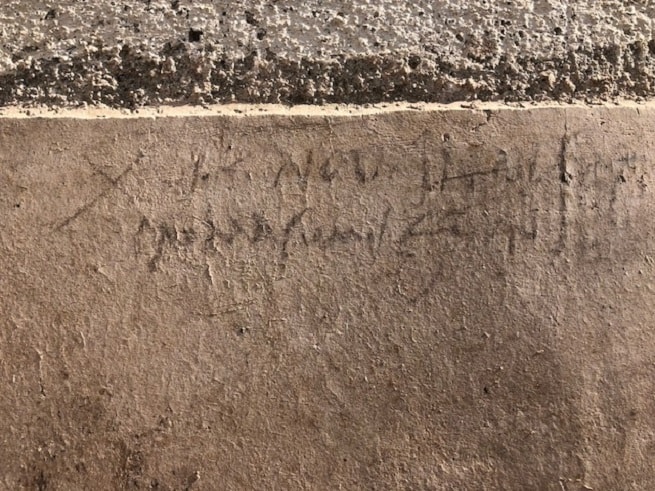
The inscription is dated to the sixteenth day before the Kalends of November, corresponding to 17 October, and reads:
XVI (ante) K(alendas) Nov(embres) in[d]ulsit
pro masumis esurit[ioni]
“On 17 October, he overindulged in food.”
New interpretations continue to animate debate over the inscription. What happened on the sixteenth day before the Kalends of November? Giulia Ammannati, Professor of Latin Palaeography at the Scuola Normale Superiore in Pisa, proposes a new reading of the inscription: “IN OLEARIA / PROMA SUMSERUNT [...]”, meaning “they took [something] from the oil storeroom [...]”.
Source: Press Office of the Archaeological Park of Pompeii
