View all buildings and places on the map
The Basilica of Pompeii, overlooking the south-western side of the Civil Forum, was one of the city’s most important public buildings. Justice was administered here, business deals and contracts were concluded, and magistrates, merchants and citizens met.
Covering about 1,500 square metres, it was also one of the most imposing buildings in the Forum complex. It was constructed in 130–120 BC, during the major phase of monumental development that transformed Pompeii in the 2nd century BC, a period of particular economic and cultural prosperity for the city.
The Pompeian Basilica is one of the earliest surviving examples of this type of building in the Roman world and preserves an architectural form that would become enormously influential in later centuries.
The centre of business and justice
In the Roman world, a basilica was not a religious building.
It was a large roofed public hall in which several activities could take place at the same time. At Pompeii, it was chiefly the place where justice was administered and business was conducted.
Merchants and citizens could meet to make agreements and discuss financial matters, while magistrates hearing legal cases sat on the great tribunal at the far end of the building.
Its position immediately beside the Forum was no accident. Politics, commerce and justice were closely connected, and the Basilica provided one of the principal covered spaces for the activities that animated the square each day.
Five entrances from the Forum
The principal approach was directly from the Civil Forum.
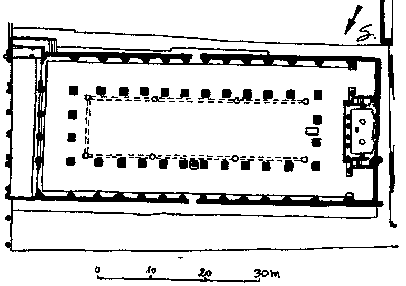
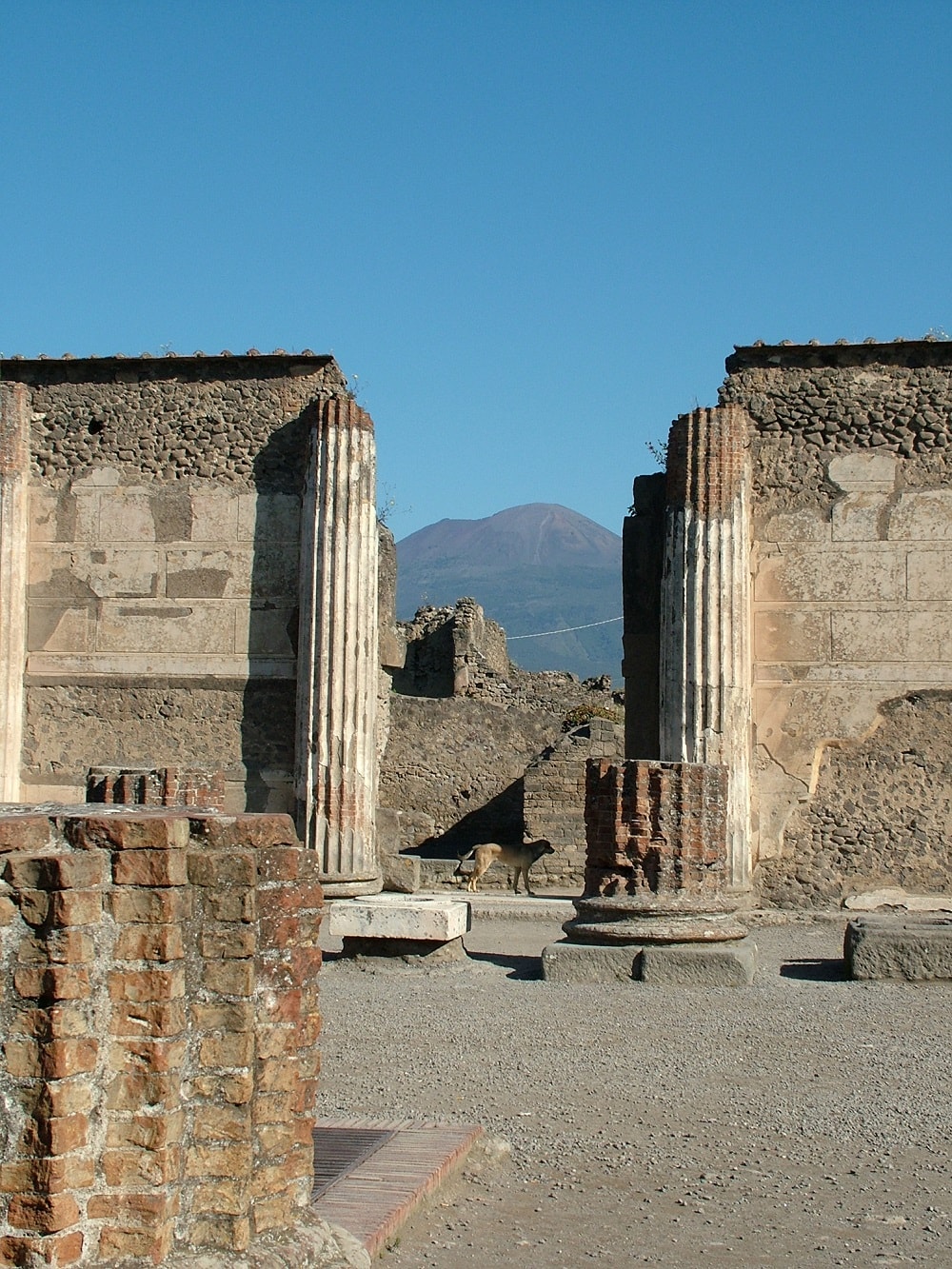
Five entrances opened on the eastern side, separated by large tuff piers. Once through them, visitors entered a setting far more monumental than the surviving ruins might suggest.
The Basilica was fully roofed, and its interior was organised as a large central hall surrounded by colonnaded aisles.
Excavations have also identified additional side entrances that connected the building with the surrounding streets and spaces.
Three aisles and the great colonnade
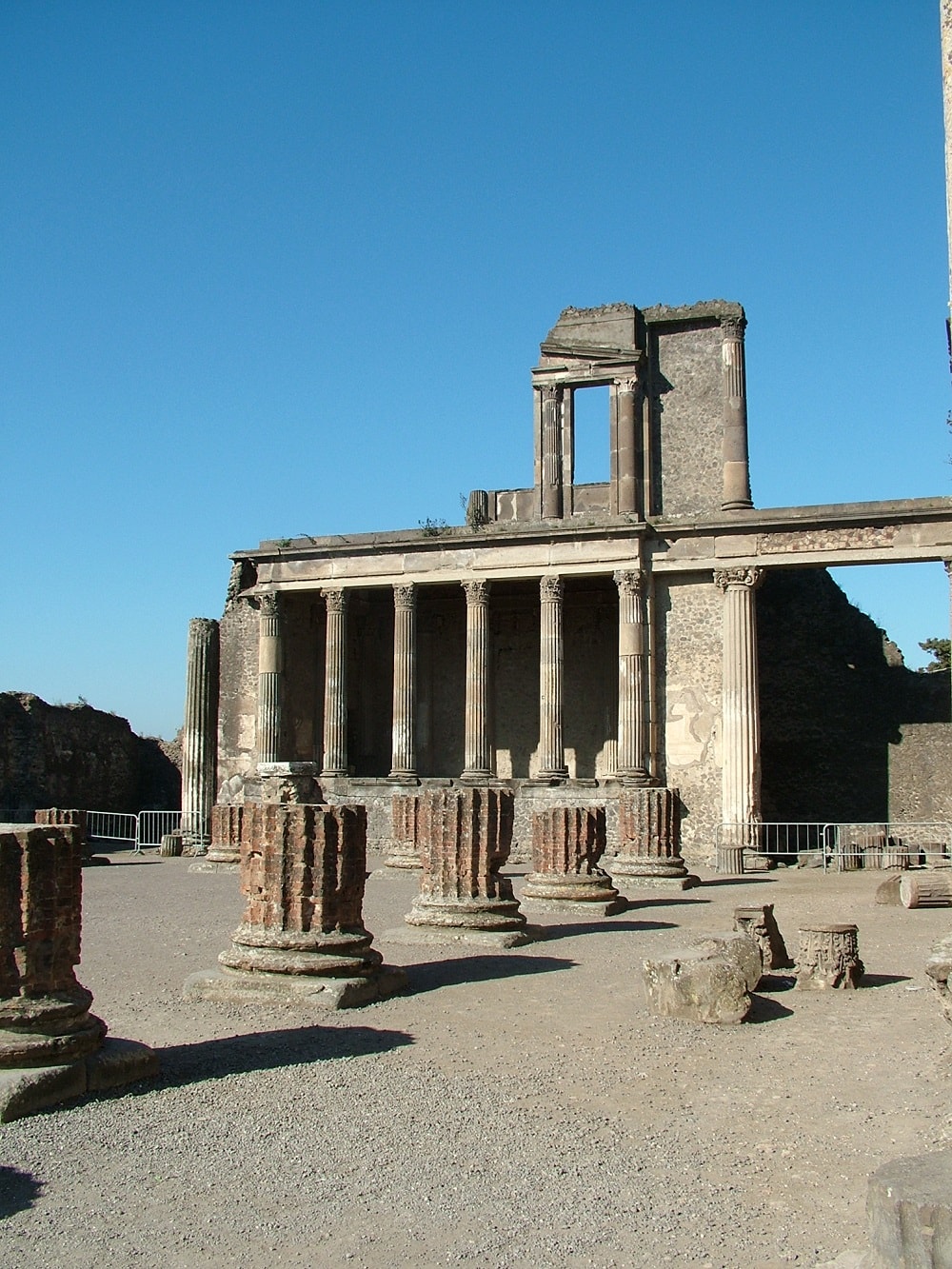
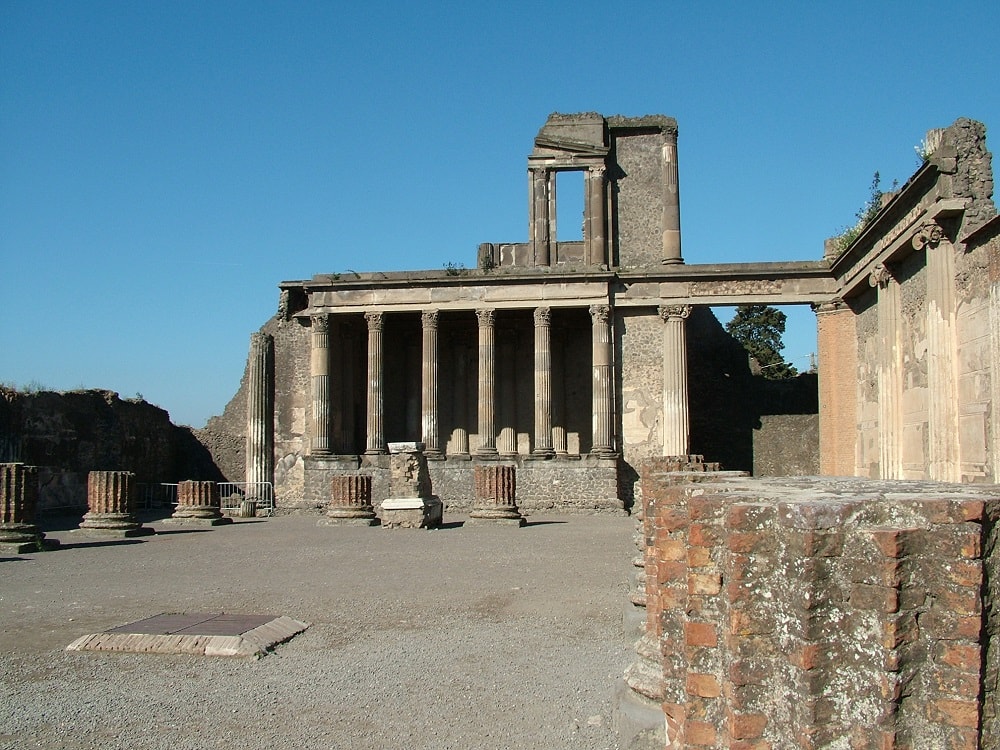
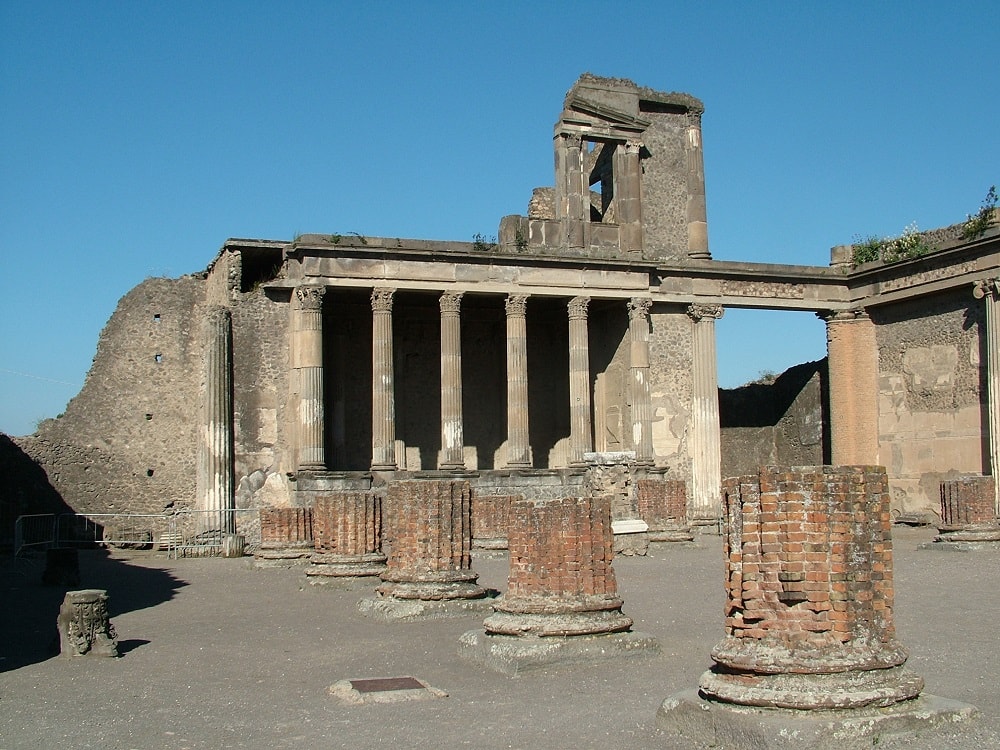
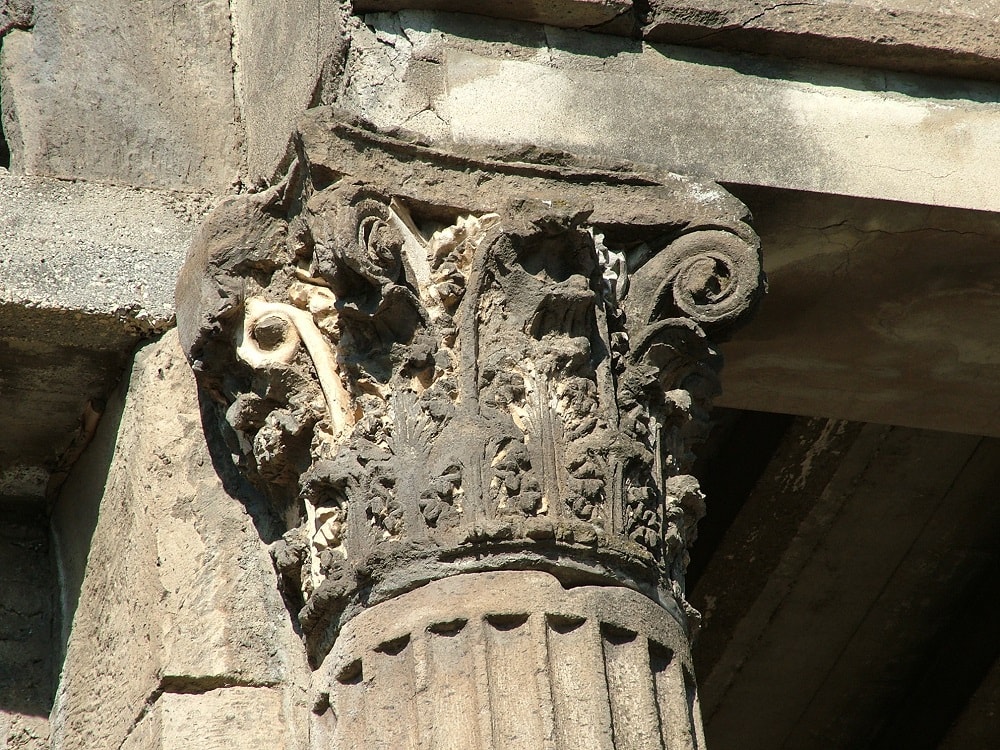
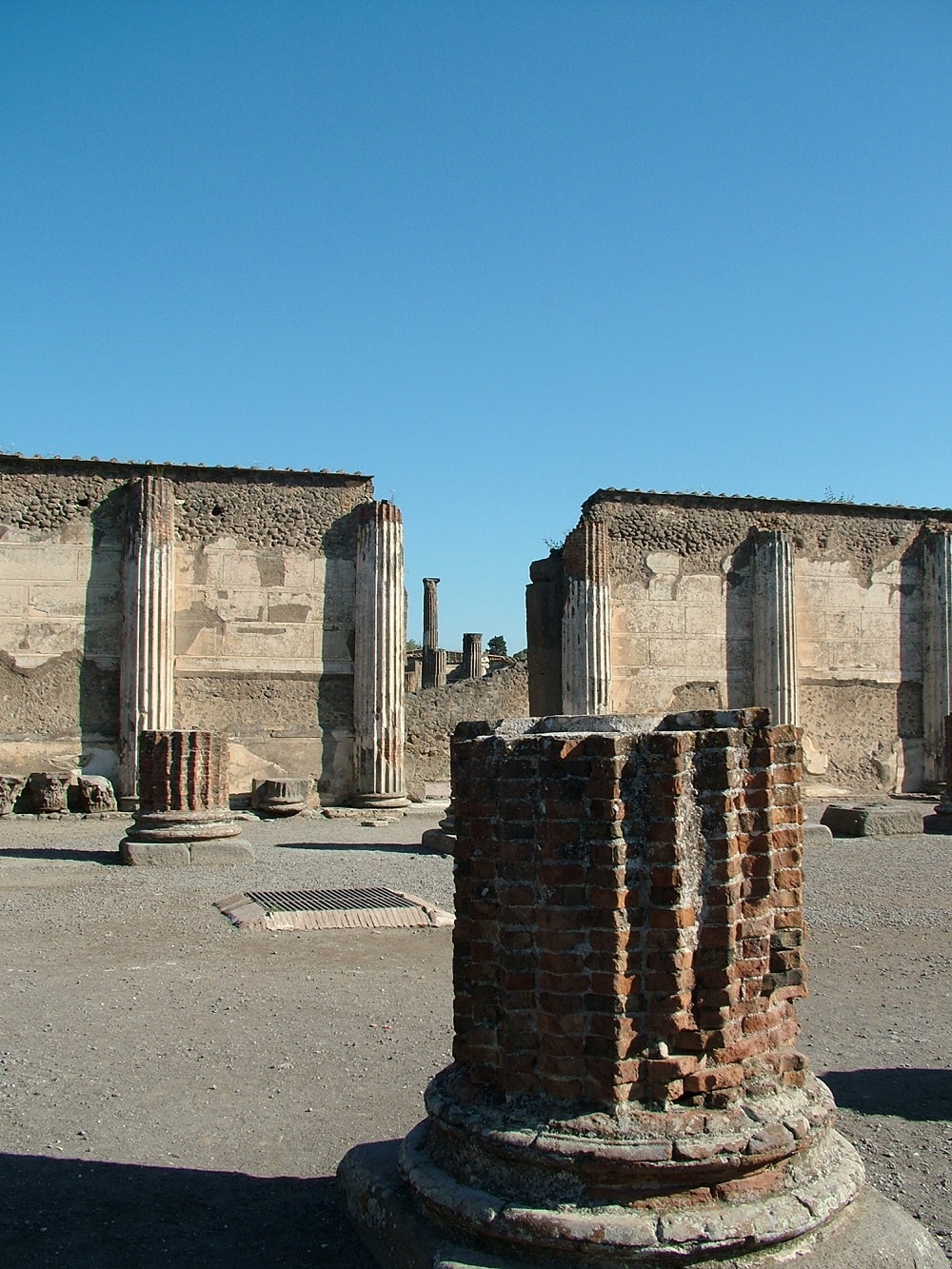
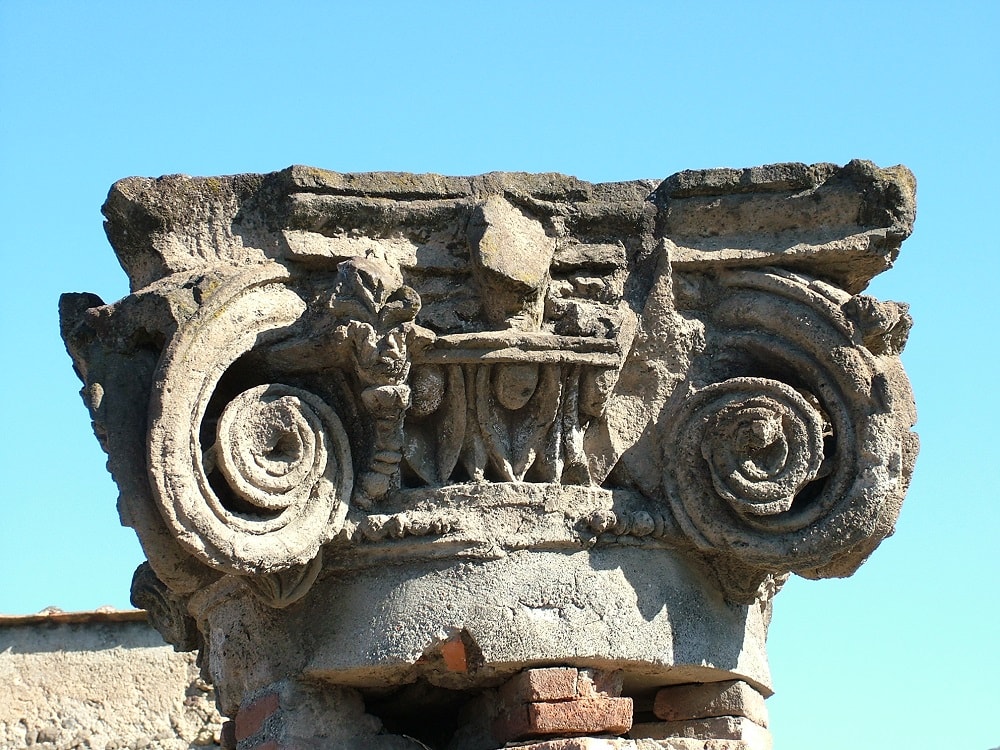
The interior was divided into three aisles by two rows of large brick columns coated with stucco and crowned by Ionic capitals.
The central nave formed the great principal space, while the side aisles allowed people to move along the length of the building.
This arrangement created a spacious monumental hall capable of accommodating many people at once.
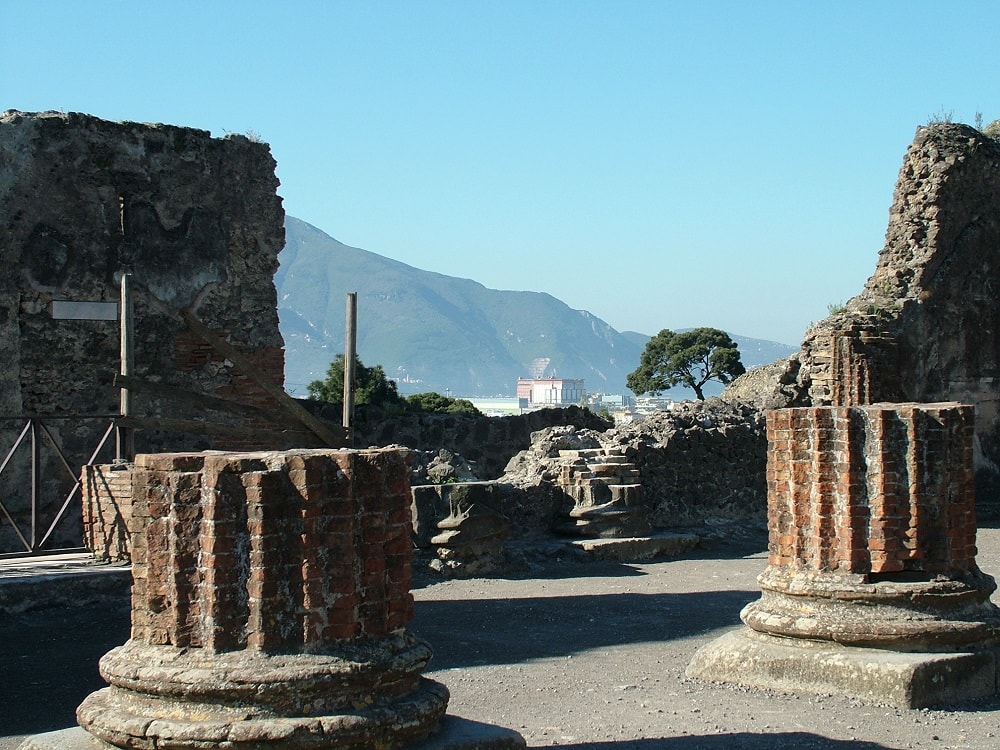
The columns, which now appear as bare brick structures, were originally coated and decorated. The visual impression must therefore have been very different from that created by the ruins today.
The entire building was also covered by a roof, probably supported by a large timber structure.
The magistrates’ tribunal
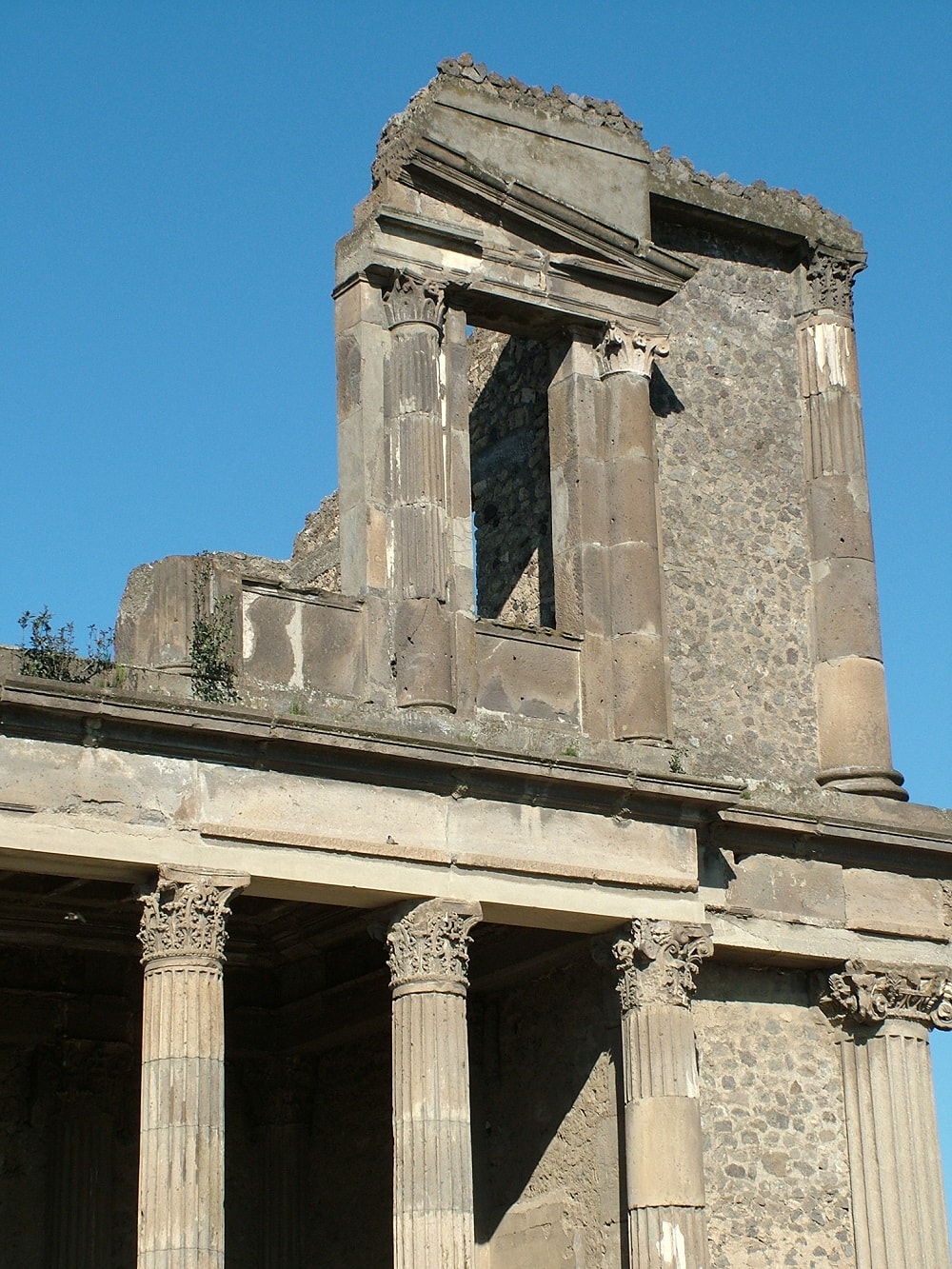
The Basilica’s most important feature stands at the western short end, opposite the entrances from the Forum: the great tribunal.
This raised structure accommodated the magistrates while judicial proceedings were under way.
Richly decorated and reached by side staircases, its elevated position separated the magistrates both visually and physically from the public gathered in the great hall.
The architecture therefore expressed the authority of those administering justice with great clarity: on entering from the square, the eye was naturally drawn towards this monumental area at the opposite end of the building.
Decoration far richer than the remains seen today
The Basilica did not have the bare appearance it presents today.
The walls retain traces of refined moulded and painted stucco made to imitate large blocks of marble. This decorative system gave the building a far more costly appearance through the use of relatively inexpensive materials.
The columns were also coated, and the entire interior must have appeared as a great monumental structure filled with coloured surfaces.
The building also contained at least one equestrian statue, further enhancing the official and commemorative character of the great hall.
Pompeii in its “golden century”
The Basilica was built during one of the most important periods in Pompeii’s history.
The city enjoyed great prosperity in the 2nd century BC. Merchants from Campania participated in trade linking the ports of the Mediterranean, while contact with cities such as Delos, Rhodes and Alexandria helped spread new artistic and architectural models.
Pompeii extensively renewed its public buildings within a few decades.
In the Forum area, the Temple of Jupiter, Sanctuary of Apollo, Macellum and Basilica were built or transformed, while the theatre district and other parts of the city were also monumentalised.
The Basilica therefore belongs to the Pompeii that preceded the Roman colony founded by Sulla in 80 BC and attests to the high level achieved by the Samnite city before its definitive Romanisation.
A building designed to impress
For anyone entering from the Forum, the Basilica must have offered a particularly dramatic perspective.
The five openings led into the long interior, where rows of columns guided the eye towards the magistrates’ tribunal at the far end.
The architecture did more than serve a practical purpose. Through its scale, decoration and spatial organisation, it communicated order, wealth and public authority.
It was one of the buildings in which the Pompeian community represented itself and its institutions.
Voices left on the walls
As in many buildings in Pompeii, numerous graffiti were left in the Basilica.
The walls preserved inscriptions and drawings scratched by people who used the building. Many have disappeared as the plaster deteriorated, but those that were recorded are valuable evidence of daily activity in this great public space.
Alongside the official architecture of magistrates and institutions, they reveal the far more spontaneous traces left by citizens who spent part of their time in the Basilica.
Rediscovery
The Basilica was uncovered in several excavation campaigns beginning in 1806 and continuing in 1813, 1820 and later during the 20th century.
The building’s discovery greatly advanced understanding of the Forum and the organisation of Pompeian public life.
Its position, plan and, above all, the presence of the great tribunal made it possible to identify the building as a basilica used for civic and judicial affairs.
One of Pompeii’s essential monuments
The broken columns and roofless walls can make it difficult today to imagine the building’s original monumentality.
It should instead be reconstructed in the mind as a vast roofed hall, long and crowded, surrounded by stuccoed columns and decorated walls, with magistrates seated on the tribunal and citizens engaged in legal cases, meetings and commercial transactions.
The Basilica thus reveals a side of Pompeii very different from that represented by its private houses.
This is not a family residence, temple or entertainment venue, but one of the spaces in which the city functioned in practical terms.
Because of its early date, scale and role in public life, the Basilica at VIII.1.1 is one of the most important monuments in the Forum and in ancient Pompeii as a whole.