



Tickets

Pompeian Curiosities
Pompeii official guide
Pompeii: Archaeological Site, Tickets and Visitor Information
Welcome to ancient Pompeii
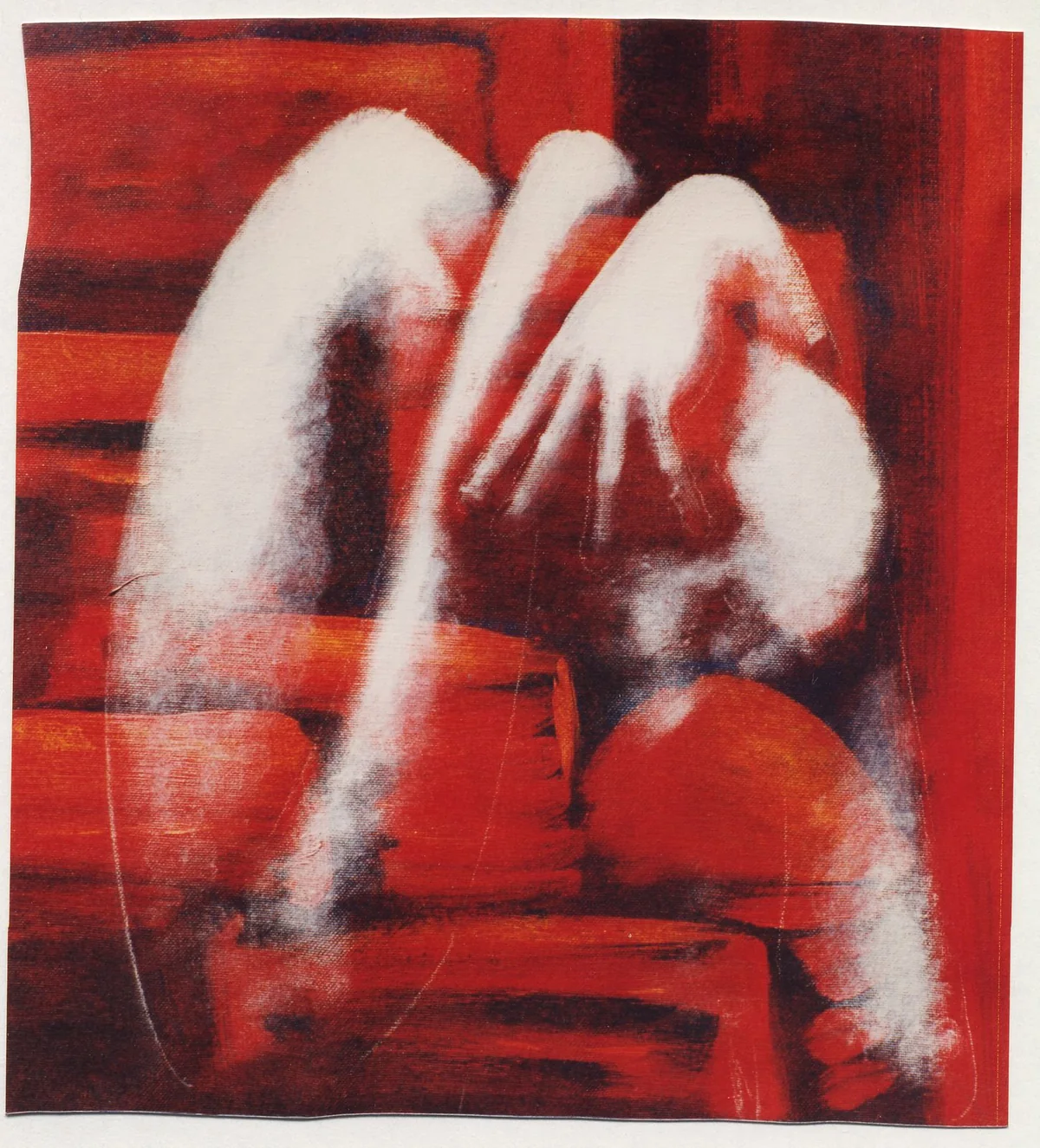
Pompeii is one of the world's most extraordinary archaeological sites. Its streets, houses, temples, baths, theatres, workshops and gardens preserve an exceptionally detailed picture of life in an ancient Roman city. The city lies on a volcanic plateau overlooking the Sarno valley, close to the Bay of Naples. Archaeological evidence places the first clearly recognisable phases of the settlement between the late 7th and the first half of the 6th century BC, although the origins of Pompeii remain complex and cannot be attributed to a single people.
Visiting the Excavations of Pompeii: Useful Tips and Guided Tours
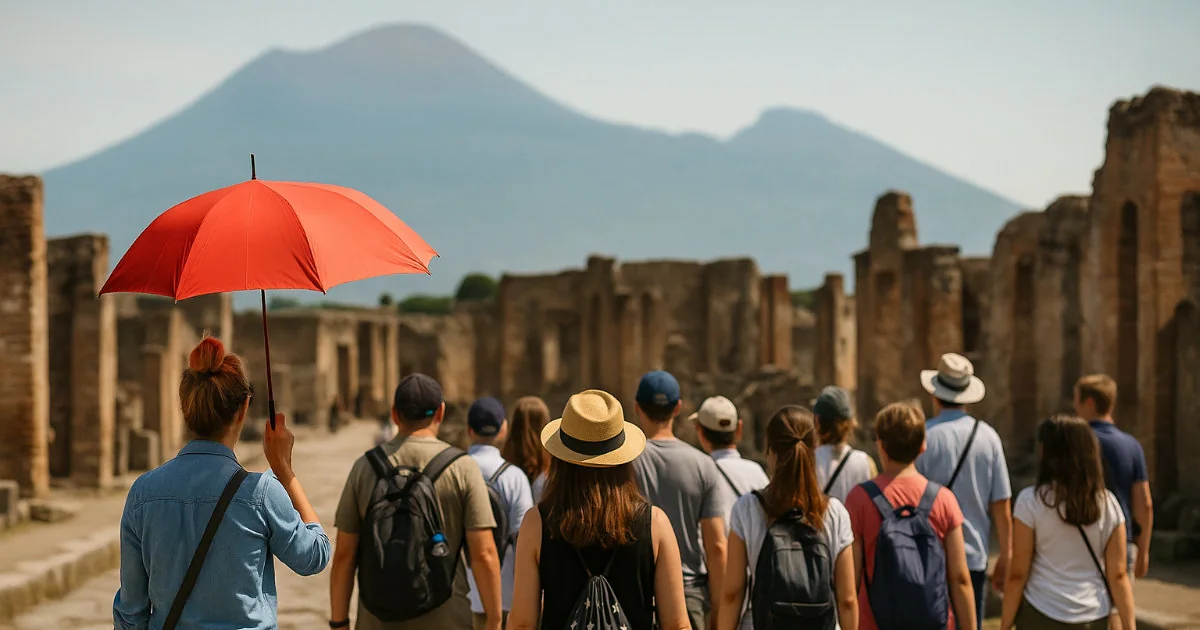
A visit to Pompeii Archaeological Park involves several hours of walking through an ancient city with original Roman streets, uneven paving, steps and changes in level. A little preparation can make the experience considerably easier and help you spend more time exploring the monuments rather than trying to find your way around the site.
If you are still organising transport, tickets and visiting times, see our Complete Guide to Visiting Pompeii.
Gladiators Return to Pompeii: Historical Re-enactments on 26 and 27 September 2026
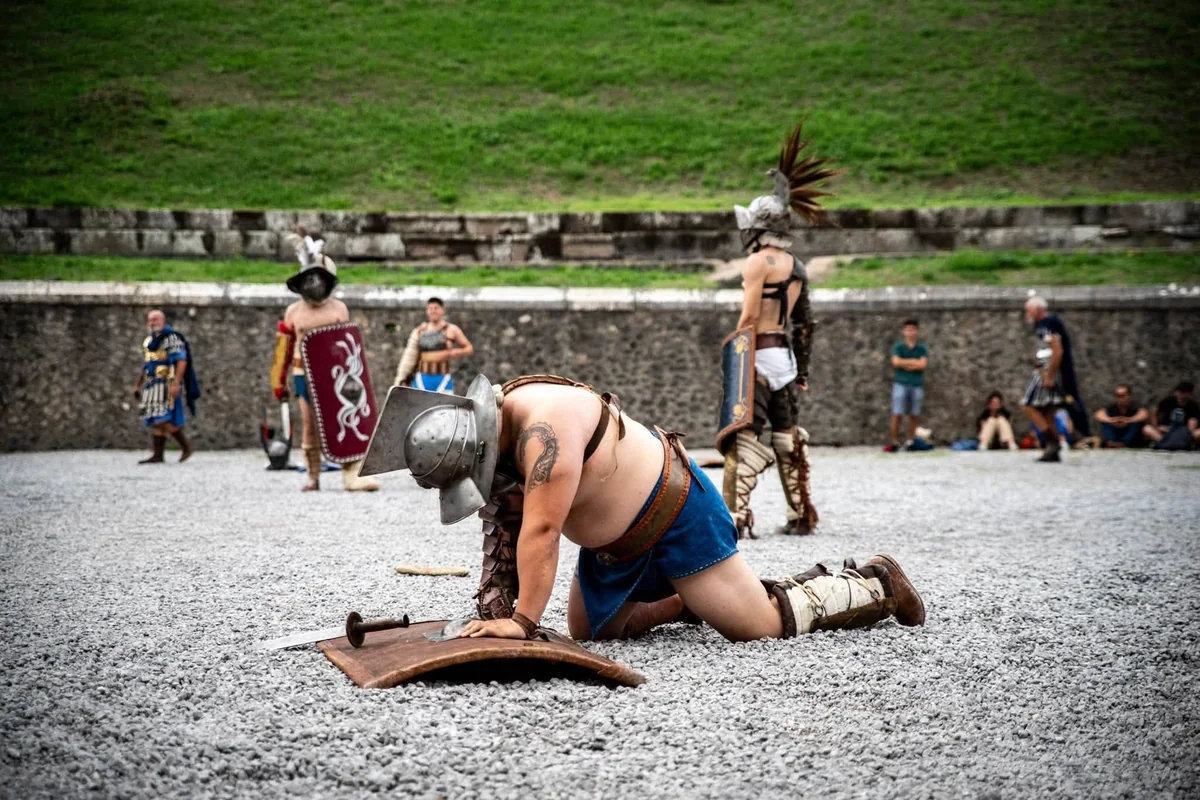
On Saturday 26 and Sunday 27 September 2026, visitors to Pompeii will have a special opportunity to experience the ancient city in a very different way, with historical re-enactments, gladiatorial displays, processions, workshops and performances inspired by Roman life.
The events are being organised by the Archaeological Park of Pompeii for the European Heritage Days 2026 and will take place not only in Pompeii, but also at Boscoreale, Stabiae and Oplontis. For visitors spending the weekend in the archaeological area, it will therefore be possible to combine a traditional visit to the houses, streets and public buildings of Pompeii with performances that bring some of these ancient spaces back to life.
Saturday 26 September will focus particularly on the world of the gladiators with “Dies in Arena”, an itinerary that follows their story from the training ground to the moment they entered the arena. On Sunday 27 September, the programme continues with the third edition of the Ludi Pompeiani, with activities and re-enactments taking place throughout much of the day around the Amphitheatre.
Pompeii After AD 79: New Evidence of Life Until the Renaissance
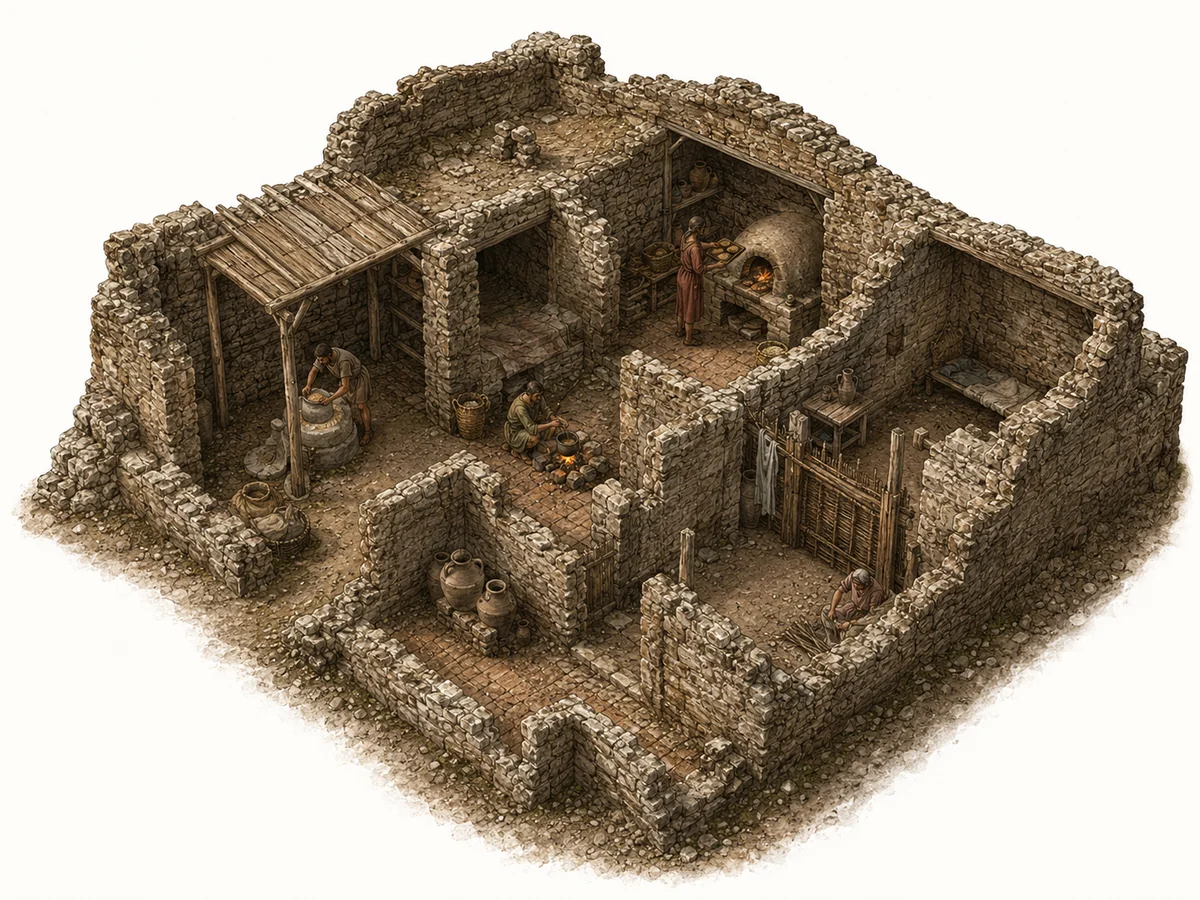
Pompeii’s history did not end completely with the eruption of Mount Vesuvius in AD 79. New archaeological investigations in the Insula Meridionalis, the large district occupying the southern edge of the ancient city, are revealing traces of human activity that continued for many centuries after the catastrophe.
Hearths, a bread oven, a grain mill, wooden structures and pottery provide evidence for the reuse of some areas between the 3rd and mid-5th centuries AD. Even more surprisingly, finds dating to the 15th and 16th centuries suggest that people were still frequenting parts of Pompeii during the Renaissance, long before the Bourbon excavations began in 1748.
What Did the People of Oplontis Eat? A New Study on the Victims of Vesuvius
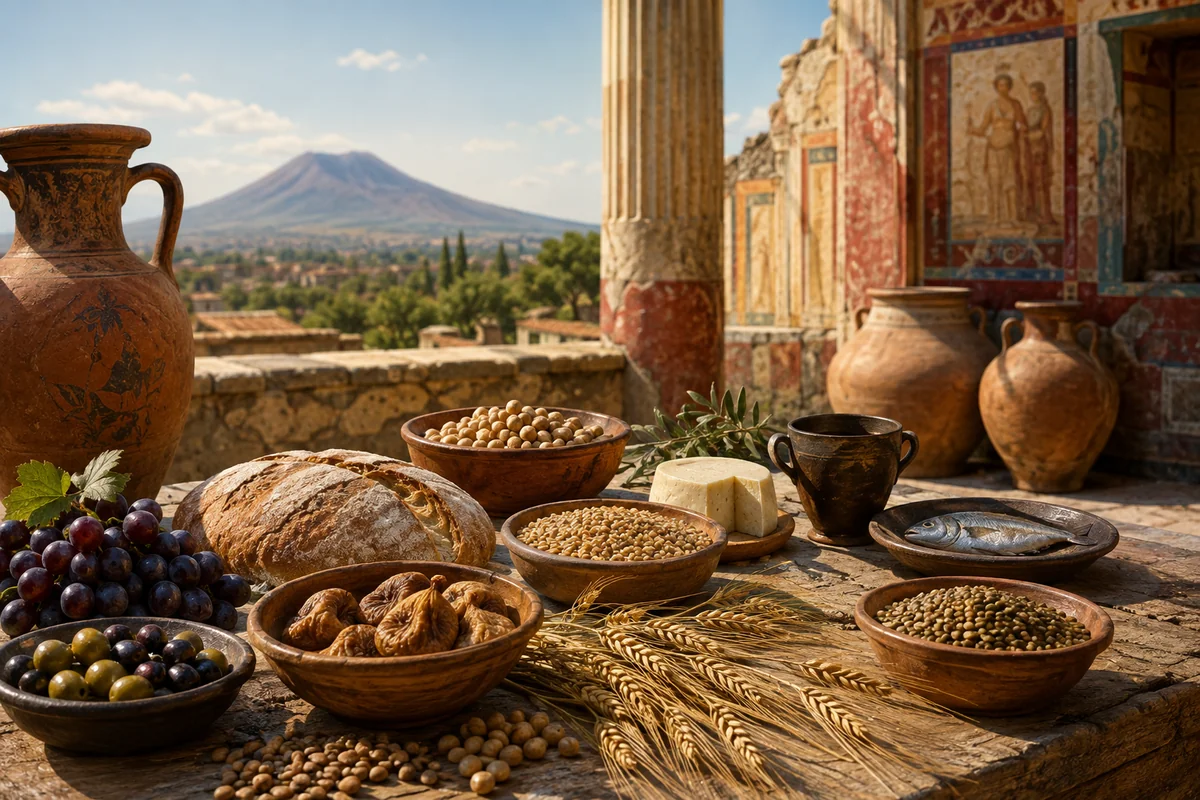
Bread, cereals, legumes and products from the land were probably at the heart of the daily diet of the people of Oplontis who died during the eruption of Mount Vesuvius in AD 79. This is revealed by a new bioarchaeological study of human remains found in the so-called Villa B, in modern-day Torre Annunziata, just a few kilometres from ancient Pompeii.
The research offers a particularly fascinating glimpse into everyday life in the Vesuvian area. Almost two thousand years after the eruption, the analysis of human bones makes it possible to reconstruct not only how some of the victims died, but also the foods that formed part of their diet.
Pompeii by Night 2026: Evening Openings at the Archaeological Park
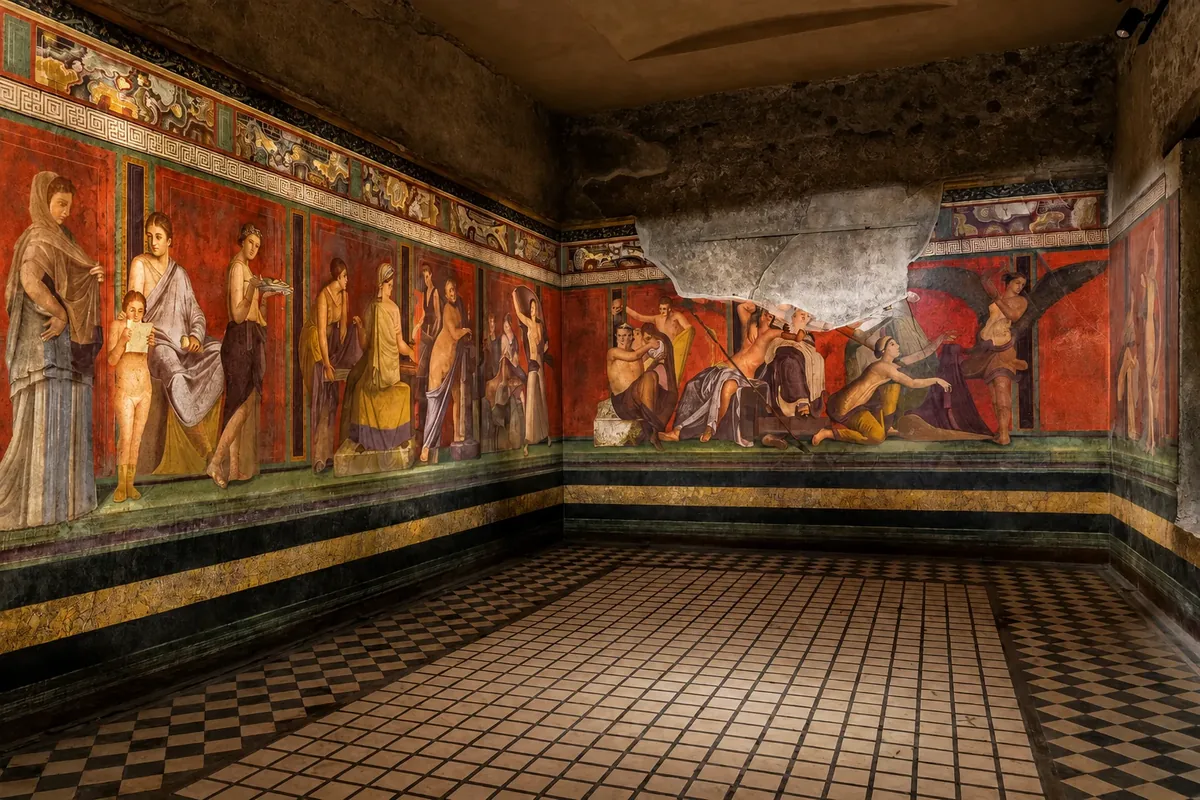
From 28 August to 10 October 2026, the “Serate della Grande Pompei” (Evenings of Greater Pompeii) return, with special night-time visits to the archaeological sites of Pompeii, Oplontis, Boscoreale and Stabiae.
Every Friday and Saturday, visitors will be able to explore sites managed by the Archaeological Park of Pompeii in the evening, from 7:30 pm to 11:30 pm, with last admission at 10:30 pm. It is an opportunity to experience the archaeological heritage in a very different atmosphere from a normal daytime visit.
A Pompeii Ceiling Comes Back to Life: Dionysus and Ariadne Reappear in the Regio IX
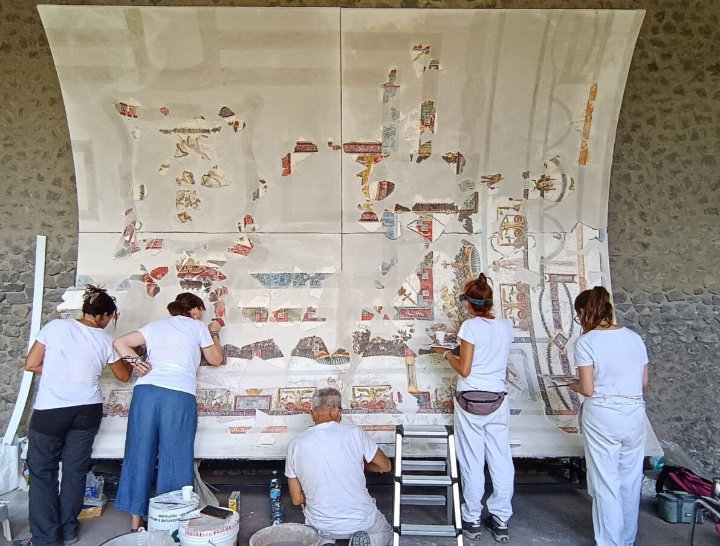
An ancient decorated ceiling, which collapsed during the eruption of Mount Vesuvius and was found in hundreds of fragments, is gradually revealing its extraordinary beauty once again. The Archaeological Park of Pompeii has presented the restoration of the vaulted ceiling from a banqueting room in the so-called House with a Bakery in Regio IX, one of the buildings involved in the most recent excavation campaigns.
Pompeii Ticket with No Entry Time Slot: Visit the Archaeological Park with Complete Flexibility
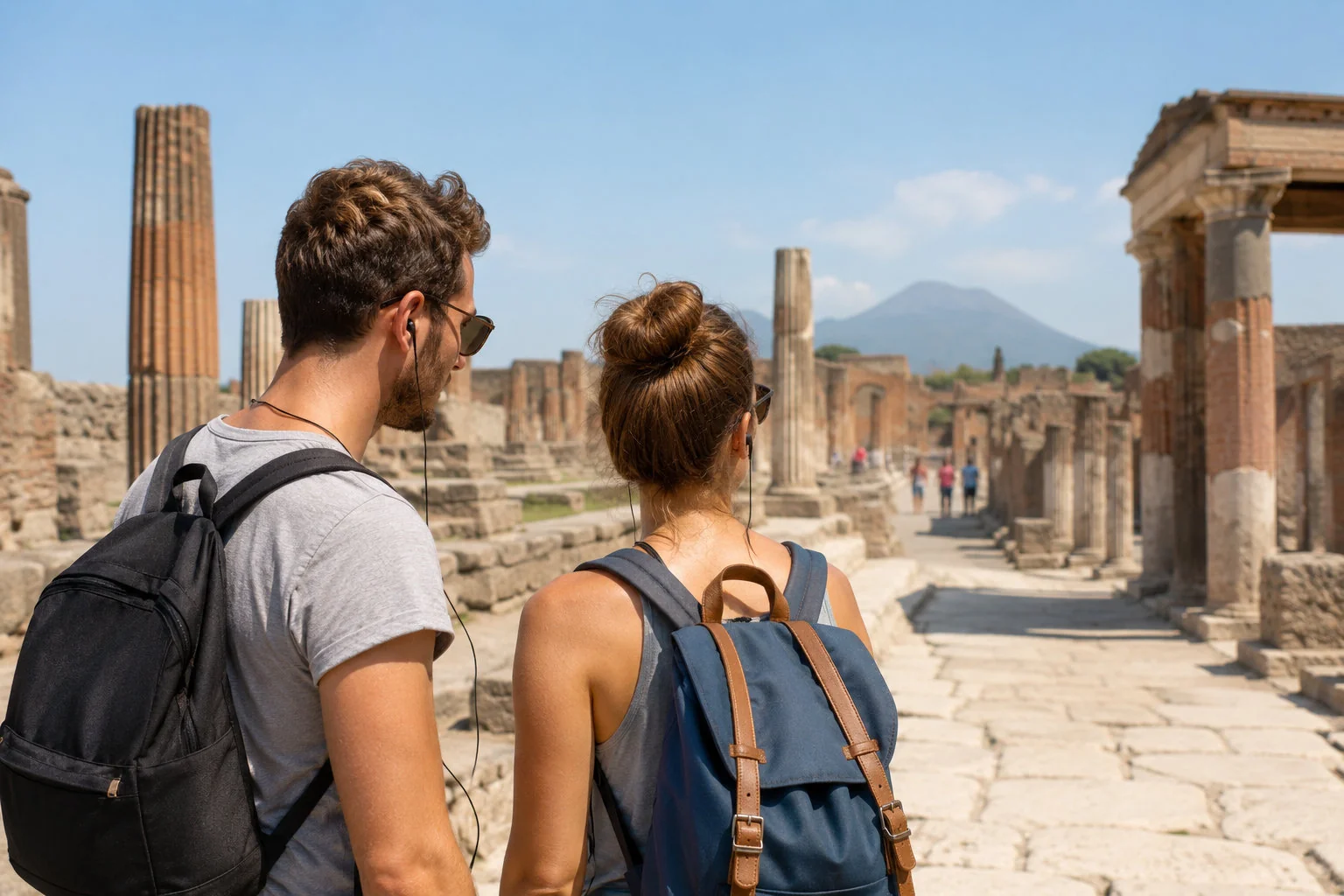
Planning a visit to the Archaeological Park of Pompeii is an unforgettable experience. However, it is not always easy to know exactly what time you will arrive. Traffic, train delays, or changes to your travel plans can make it difficult to stick to a fixed schedule.
For this reason, a new ticket is now available that gives you much greater flexibility. Unlike most Pompeii tickets, this one does not require you to book a specific entry time slot. You can enjoy your visit without worrying about arriving at a pre-booked time.
How to organize a visit to Pompeii and Herculaneum on the same day
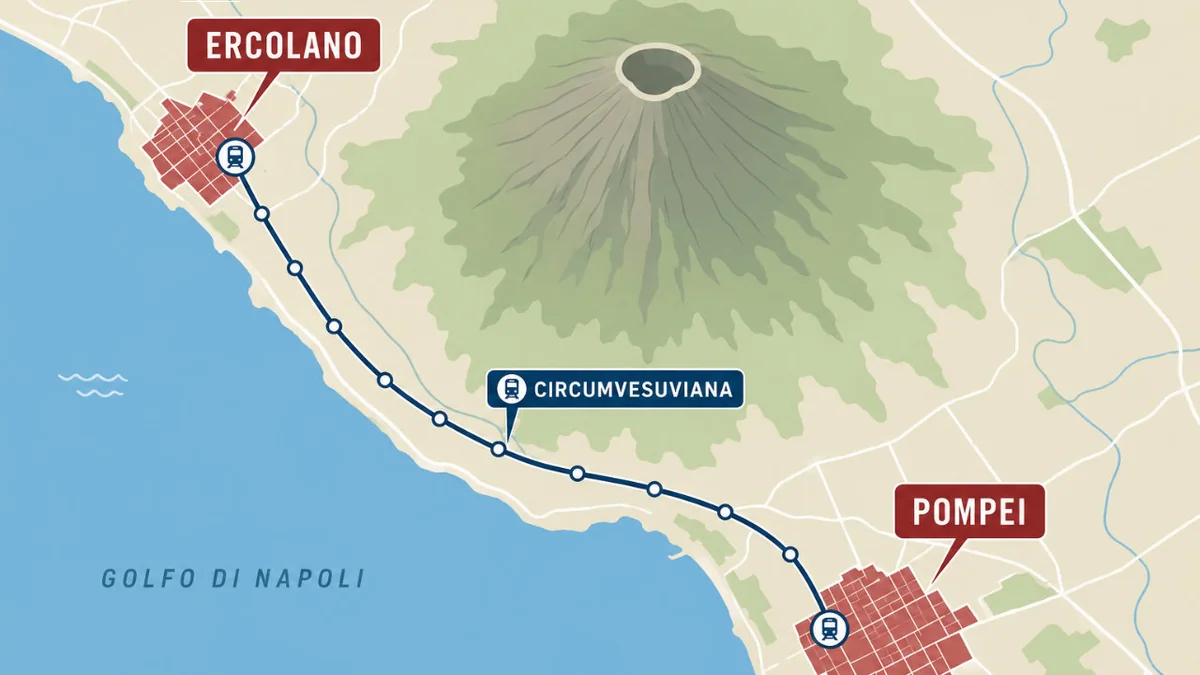
Visiting the ruins of Pompeii and Herculaneum on the same day is one of the most fascinating and highly requested experiences for travelers exploring the Campania region. Both ancient cities were frozen in time by the tragic eruption of Mount Vesuvius in 79 AD, yet they offer two completely different glimpses into Roman life. Pompeii amazes visitors with its monumental scale, while Herculaneum charms with the extraordinary preservation of its upper floors and organic materials.
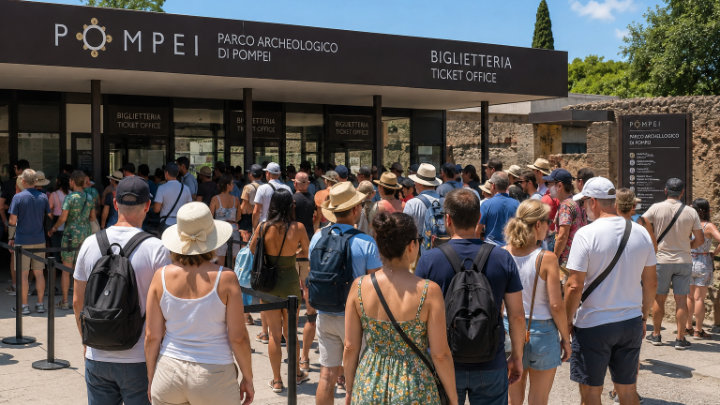
However, planning this double itinerary entirely on your own can quickly turn into a logistical headache. Juggling train schedules, waiting in long ticket lines under the sun, and managing your time efficiently can be a real challenge.
Here is the definitive guide by Pompeionline to organizing your perfect, stress-free day.
New Pompeii Ingress Rules 2026: Daily Cap & Time Slots
Pompeii: The Last Breath in the Bakery. The Mystery of the Two Equids of the Insula of the Chaste Lovers
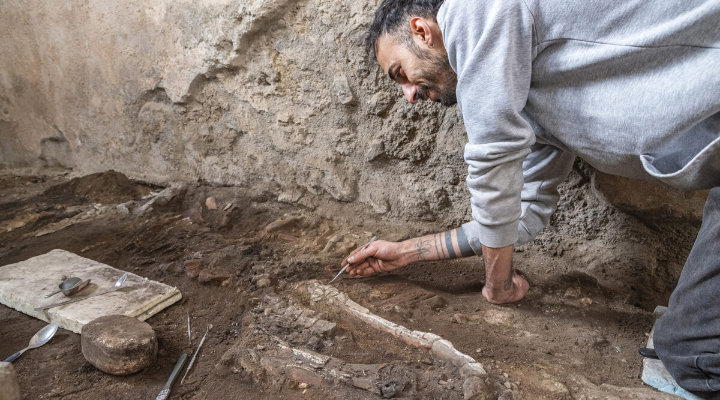
Pompeii never ceases to amaze, and sometimes the most moving discoveries come from simple "cleaning" operations in already known areas. This is exactly what happened recently in the Insula of the Chaste Lovers, where new excavations brought to light a story of death and a tender bond between humans and animals, buried for nearly two thousand years in a corner of an ancient bakery.
Pompeii Regio V: an Egyptian situla in the back room of the Thermopolium
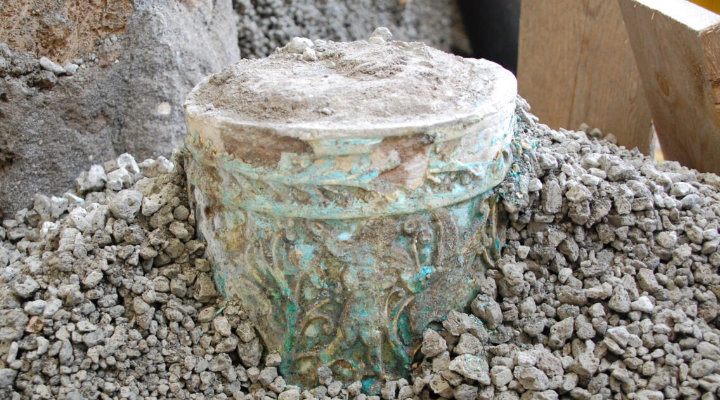
During recent stabilization and conservation work at the famed Thermopolium in Regio V, an intriguing detail came to light: at the center of the service kitchen stood a refined glass-paste situla made in Alexandria, Egypt, decorated with hunting scenes in a Nilotic style. An object usually found in Vesuvian contexts as a high-status garden or reception ornament was, in this case, repurposed as a practical kitchen container. Ongoing analyses may even reveal traces of its original contents.
The Villa of the Mysteries: New Discoveries Illuminate the Gateway to the Past and the Forgotten Voices of Pompeii
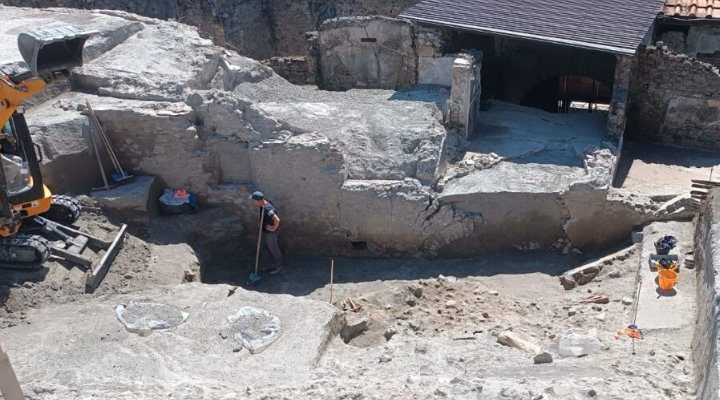
The Villa of the Mysteries, one of the most iconic Roman residences outside Pompeii and world-famous for its extraordinary Second Style Dionysian fresco cycle, continues to reveal secrets that deepen our understanding not only of ancient art, but also of daily life and social dynamics nearly two thousand years ago.
- New Insights from Organic Remains Reveal Diet, Agriculture, and Animal Husbandry in Roman Pompeii
- Pompeii, new excavations bring to light a monumental tomb with a high relief depicting a married couple.
- A megalography on the mysteries of Dionysus emerges in insula 10 of Pompeii's Regio IX
- Pompeii Half-Day Tour from Naples with Transport and Guide
Page 1 of 2